
Continuity · connection · knowing when to ask for help
Family mental health and culture shock abroad
Moving abroad can bring excitement, relief, grief, loneliness and stress—sometimes in the same week. A useful plan does not promise constant happiness. It protects existing care, makes ordinary connection easier and names the route to help before anyone is in crisis.
Last verified 11 September 2026
The short answer
Start with what your family needs to protect
Treat mental health continuity like any other important healthcare need. Before moving, review current care, medicines, insurance, lawful telehealth, suitable local providers and the emergency route. After arrival, protect sleep, daily structure, movement, community and honest family conversations. Do not explain every serious or persistent change as culture shock.
Keep the decision grounded
Four things to protect throughout the move
Use these priorities when comparing destinations, schools, care and timing. A plan that works on paper still needs to work in an ordinary family week.
No gap in essential care
Agree the last home-country appointment, sufficient lawful medication, records and the first destination appointment before travel.
A local route to urgent help
Save the correct emergency number, suitable emergency department, insurer assistance and a trusted person who can help with transport or children.
A connected ordinary week
Build sleep, meals, movement, meaningful work or learning and repeated contact with other people before isolation becomes the default.
Permission to revise the move
Changing neighbourhood, school, job pattern, treatment or even the relocation plan can be a responsible response to evidence—not a failure.
A practical sequence
Work through the decision in a calmer order
Each stage produces a useful answer, record or agreement before the family takes the next step.
- 01Before deciding
Include wellbeing in destination fit
Consider language, stigma, provider depth, medication access, climate, air quality, community, work pattern and the family's existing vulnerabilities.
- 02Before leaving
Build the continuity handover
Review treatment, relapse or warning signs, medication, records, insurance, telehealth limits and the first local provider with the current clinician.
- 03First weeks
Lower the pressure to perform
Jet lag, heat, unfamiliar tasks and lost support can reduce everyone's capacity. Keep expectations realistic and protect basic routines.
- 04Ongoing
Notice patterns and act early
Look for changes in sleep, appetite, mood, school or work, substance use, conflict, withdrawal and functioning. Ask directly rather than guessing.
A family weather report—not a diagnosis
Notice what is changing
One difficult day may need rest. A pattern across several parts of life deserves attention. Severity and safety always matter more than a timetable.
Body
Sleep, appetite, energy, pain, panic symptoms, medication effects and increased alcohol or substance use.
Daily life
School or work attendance, self-care, concentration, household tasks and willingness to leave home.
Connection
Withdrawal, conflict, loneliness, bullying, discrimination and whether anyone has a trusted person outside the household.
Safety
Hopelessness, self-harm, suicidal thoughts, psychosis, violence, dangerous impulsivity or an inability to keep someone safe.
Turn reassurance into something useful
Write down the answer you can actually rely on
Keep names, dates and documents with the answer. General promises are difficult to use when staff, circumstances or countries change.
| Area | Confirm before moving | Keep after arrival |
|---|---|---|
| Clinician | Destination licence, age group, language, method, availability and fees | Appointment plan, reports, consent and coordination with other care |
| Medication | Generic name, lawful import, supply, storage, prescription and alternatives | Review dates, side-effect plan, pharmacy and no abrupt changes without advice |
| Insurance | Mental-health benefits, exclusions, waiting, pre-authorisation, network and evacuation | Claims evidence, limits, renewals and a self-pay contingency |
| Telehealth | Clinician may practise where patient is located, indemnity, privacy and emergency process | Local address, local backup and a plan if cross-border sessions must stop |
| Crisis plan | Warning signs, coping, people, professionals, emergency department and safer environment | Accessible copies, updated numbers and practice before a crisis |
Pause and check
Signs that the plan needs a closer look
One concern does not always end the move, but it should produce a clearer answer before the family commits.
“It is only culture shock”
Culture shock is not a clinical test. Severe, persistent or dangerous symptoms need assessment regardless of what triggered them.
Running out of medication
Brand, strength, controlled status and availability can differ. Plan lawful supply and clinical follow-up before the move rather than attempting abrupt substitution.
A therapist who cannot name an emergency route
Cross-border telehealth needs a local address, emergency contact, escalation process and clarity about where the clinician may legally practise.
One isolated caregiver carrying everything
Employment, schooling, domestic work and emotional support can collapse onto one adult. Plan respite, money and connection as family infrastructure.
Research from home
Six useful things to organise before moving
These actions reduce pressure after arrival and make provider conversations more specific.
Review with the current clinician
Discuss fitness and timing of the move, warning signs, medication, records, handover, telehealth and what should trigger earlier review.
Write a care summary
With consent, record diagnoses where relevant, current treatment, medicines, allergies, helpful approaches, risks, contacts and the purpose of the handover.
Verify providers independently
Check local professional registration, child or adult scope, language, modality, fees, wait time, prescribing and hospital affiliation where relevant.
Read insurance line by line
Separate outpatient therapy, psychiatry, medication, inpatient care, crisis admission, substance treatment and evacuation; note exclusions and annual limits.
Create a clinician-supported safety plan
For anyone at known risk, prepare warning signs, coping steps, supportive people, professional help and ways to make the environment safer.
Build two kinds of community
Keep meaningful home connections while joining a repeated local activity, school, faith, volunteering, sport or peer setting that does not depend on a crisis.
What changes by destination
Confirm the local system before relying on the plan
Regional guidance can organise the questions. Only the responsible authority, institution or appropriately qualified professional can confirm how the current local rules apply.
Professional regulation
Verify the psychiatrist, psychologist, counsellor or other clinician through the responsible regulator. Titles and scopes vary between countries.
Language and cultural fit
Ask about working language, interpreter use, experience with the person's age and background, confidentiality and how family or school involvement is handled.
Emergency capability
Confirm where a child or adult would be assessed, whether the hospital has appropriate psychiatric support, how admission works and what insurance or payment is needed.
Medicine law and supply
Check import permission, local prescribing, controlled-drug rules, generic alternatives and supply reliability with authorities and licensed clinicians or pharmacists.
Save these questions
Questions to answer before the move becomes fixed
Use the people and institutions named in each question. “It should be fine” is not a complete answer for a high-value family decision.
- 01
What currently protects each person's mental health?
- 02
Which treatment or medication must continue without a gap?
- 03
Can the current clinician lawfully provide telehealth after the move?
- 04
Which local provider has verified credentials and suitable experience?
- 05
What exactly will insurance cover, exclude or require approval for?
- 06
Where would we go for urgent assessment at night or for a child?
- 07
Who can help with children, transport or language during an emergency?
- 08
What evidence would make us change the home, school, work pattern or move itself?
Bring the research together
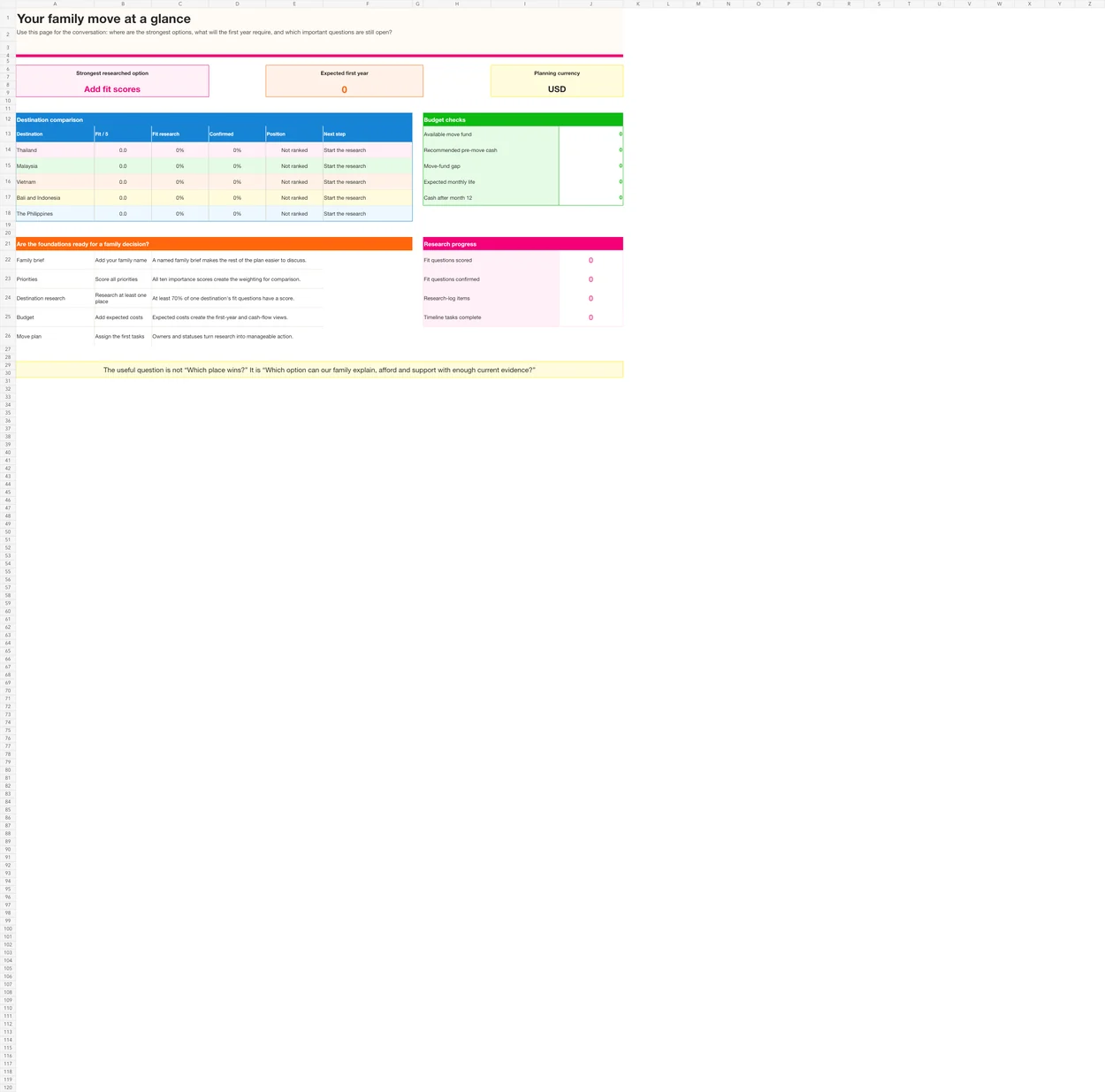
Ready to turn your research into a family move plan?
The Family Move Planner keeps your destination comparison, family priorities, budget, sources, questions and timeline in one organised system.
£39one-time digital purchase
Common questions
Questions families ask about family mental health and culture shock abroad
What is culture shock?
It is a broad description for stress and adjustment when familiar social cues, routines and supports change. People may feel excitement, fatigue, frustration, homesickness or isolation in different orders. It is not a diagnosis or a reason to dismiss serious symptoms.
How long does culture shock last?
There is no reliable universal timetable or fixed set of stages. Adjustment can change with school, work, housing, health, visitors and anniversaries. Focus on severity, functioning, safety and the person's own experience rather than a deadline.
Should we find a therapist before moving abroad?
If someone already needs care or has a history of significant difficulty, arranging continuity before departure is sensible. Other families can still research suitable local and emergency options so they are not starting from zero if support becomes necessary.
Can my therapist treat me online from another country?
Possibly, but permission can depend on where the clinician and patient are physically located, licensing, indemnity, privacy and professional rules. Confirm this with the clinician and relevant regulator, and keep a local backup and emergency route.
Will international health insurance cover mental healthcare?
Coverage varies widely. Check outpatient psychology, psychiatry, medication, inpatient care, substance treatment, waiting periods, pre-existing conditions, provider networks, pre-authorisation and annual or lifetime limits separately.
How can parents help children with culture shock?
Listen without correcting the feeling, keep routines predictable, protect sleep and familiar relationships, support repeated local connection and involve the child in age-appropriate choices. Ask school what it observes and seek help if changes persist or impair daily life.
What should be in a mental health crisis plan abroad?
Create it with an appropriate clinician where possible: personal warning signs, coping strategies, people and places that help, professional and crisis contacts, the appropriate emergency department, current medicines, insurance details and steps to reduce access to means of harm.
When is mental health distress an emergency?
Treat an immediate risk of suicide, self-harm, serious harm to others, overdose, severe confusion, psychosis or inability to stay safe as an emergency. Contact the local emergency service or go to the nearest appropriate emergency department; do not leave a person at immediate risk alone.