
Practical family relocation · complete plan
Moving to Southeast Asia with children
A family move works when the visa, school, home, healthcare, money, transport and children's needs all point to the same place and date. This guide helps you connect those decisions before booking flights turns early assumptions into expensive commitments.
Last verified 31 August 2026
The practical answer
Make the big decisions before the long to-do list
A school place may determine where you live; the visa may affect work and banking; healthcare needs may rule out a beautiful island; and moving a pet may change the destination entirely. Settle the decisions that affect everything else first, then arrange the details that can still be changed.
Seven parts of the move
Keep one clear family plan
Give each area an owner, a current official source, a folder for important records and a next decision. If two parts of the plan contradict each other, resolve them before committing.
Visas
A lawful route for each adult and child, with work and study rights checked separately.
School
Actual availability, total fees, placement and travel time—not just a campus name on a map.
Home
A flexible first home close to daily needs, checked for noise, flooding and internet.
Healthcare
Medication continuity, appropriate local care, how insurance works and where to go for specialist help.
Money
Moving-year tax, deposits, school cash flow and two independent ways to pay.
Transport
Legal, insured and child-safe journeys to school, work, clinics and the airport.
Family continuity
Relationships, routines, identity and honest space for a child to dislike parts of the move.
A sensible order for the move
Commit gradually
- Check that the move can workVisas, school, healthcare, tax and work, and any pet restrictions all have credible answers.
- Choose the right areaCheck journeys between school, home and healthcare at realistic times and in typical weather.
- Keep early bookings flexibleUse conditional, refundable or short commitments until documents and dates are firm.
- Move the householdArrange freight, a longer lease and major payments only after customs eligibility and arrival timing align.
- Settle first, improve laterUse the first 90 days to replace assumptions with real experience before upgrading the home or car.
Children are part of the decision
Give reassurance without pretending everything is certain
Children need honest boundaries, a meaningful say in suitable choices and dependable contact with people they care about. They do not need to feel excited all the time; they need to feel safe and know that some decisions can still change.
Younger children
Make time visible
Use a simple calendar, photos of the new home area and a short goodbye ritual. Keep favourite bedtime objects and the first-week routine in cabin baggage.
Primary age
Offer a few real choices
Let them choose a bedroom detail, activity or farewell plan while adults take responsibility for visas, school and safety. Arrange a named school contact and a first activity before arrival.
Teenagers
Protect identity and privacy
Discuss curriculum consequences, friendships and online contact honestly. Give real influence over school and activities, and make an agreed review date more than a vague promise.
Check in as a family. Ask what is easier, harder and missing after week one, month one and term one. Address problems that keep returning; one difficult day does not mean the move has failed, and one exciting day does not mean everyone has settled.
Design the landing
What belongs in the 72-hour kit
Authority
Travel documents, consent, visas, school acceptance, insurance, prescriptions, customs and pet originals plus secure copies.
Continuity
Climate-appropriate clothes, school essentials, medicines, comfort objects, chargers and a small familiar food plan.
Fallback
Local cash, two working cards, offline contacts, accommodation route, mobile roaming and enough supplies for a delayed bag or late arrival.
More practical moving guides
Work through each part of the move
Bring the research together
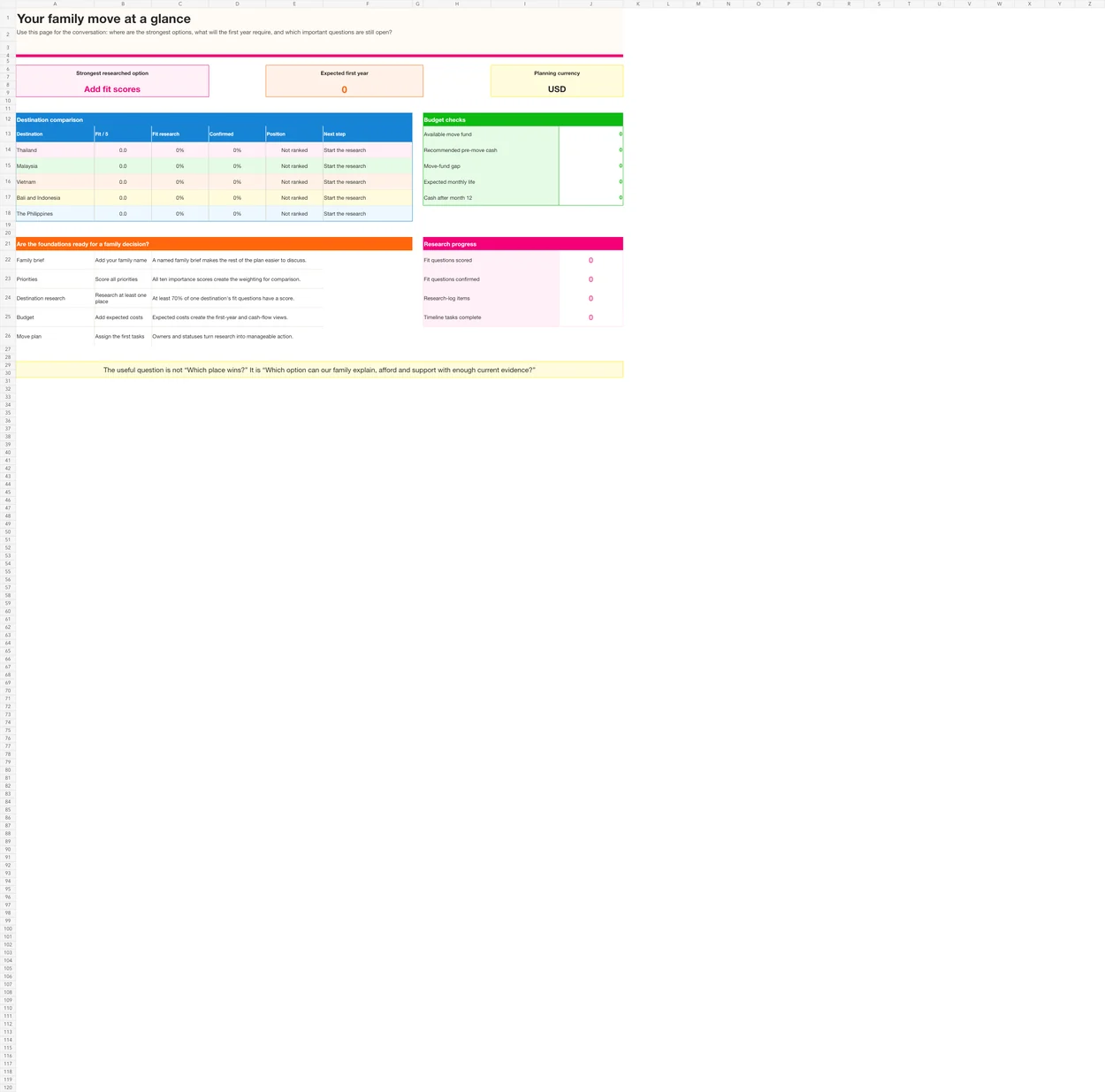
Ready to turn your research into a family move plan?
The Family Move Planner keeps your destination comparison, family priorities, budget, sources, questions and timeline in one organised system.
£39one-time digital purchase
Common questions
Questions about moving to Southeast Asia with children
How far ahead should a family start planning a move to Southeast Asia?
Start the decisions that affect everything else 9–12 months ahead: lawful status for every person, school availability, healthcare continuity, whether a pet can move safely and the move-year tax position. Freight and housing can follow once the destination and journeys between school, home and healthcare look workable.
Should we choose the city or the school first?
For school-age children, shortlist viable schools and then test homes around their real campuses. A desirable city label cannot rescue a two-hour school run, a full year group or a curriculum that breaks the child's next transition.
Is a scouting trip worth it?
Usually, if it tests ordinary life rather than attractions. Travel the school route at peak time, tour housing in wet weather, visit the likely clinic, buy groceries, test mobile coverage and let children experience a normal weekday.
How do we help children adjust to an international move?
Give age-appropriate information, preserve relationships and routines, let children influence reversible choices and expect mixed feelings. Build familiar anchors into the first weeks and seek professional help if distress is persistent or interferes with sleep, eating, school or daily life.
Should we rent before signing a long lease?
A short, flexible landing period usually buys useful evidence about noise, flooding, commute, broadband, building management and the child's routine. Balance that benefit against school-start timing and the cost of moving twice.
What documents should travel in hand luggage?
Carry passports, visas or approvals, birth and marriage evidence, any parental-consent documents, school admission and records, prescriptions and medical summaries, insurance details, pet and customs documents, accommodation details and accessible copies. Do not place the only copy in checked baggage or freight.
Can one parent take a child abroad without the other parent?
Permission may be required from everyone who holds custody or parental responsibility, or from a court. The rules and evidence depend on the child’s home jurisdiction, nationality, destination and transit points. Check each relevant authority and carry any consent letter, court order or certified relationship evidence they require.
How much emergency money should we hold?
There is no universal number. Hold enough accessible through more than one provider and currency to cover temporary accommodation, food, local transport, medical excess or deposit, and a change or exit flight. The amount should reflect family size, insurance payment mechanics and how quickly income or transfers can be restored.
What should happen in the first 90 days?
Complete registrations tied to local status, stabilise school and healthcare, test the real budget and commute, close evidence gaps, and review the lease, insurance and transport plan after actual use. Avoid treating arrival as the end of the project.