
School continuity · friendships · a voice in the move
Moving abroad with teenagers
A move can open an extraordinary chapter while also taking a teenager away from friends, routines and a growing sense of independence. Good planning makes room for both truths and gives them meaningful influence over how the move happens.
Last verified 11 September 2026
The short answer
Start with what your family needs to protect
Tell teenagers early enough to process the move, listen without requiring enthusiasm and give them real choices within the decisions adults must make. Protect qualification continuity, friendships, sleep, privacy and activities, and agree how the family will judge whether the new life is working. Adjustment is not a performance with a fixed deadline.
Keep the decision grounded
Four things to protect throughout the move
Use these priorities when comparing destinations, schools, care and timing. A plan that works on paper still needs to work in an ordinary family week.
A real voice
Explain what is decided, what remains open and which choices belong to the teenager. Listening is useful even when the final decision cannot change.
An intact education route
Map curriculum, credits, subjects, exams, graduation, university requirements and the route back before choosing a school start date.
Friendship continuity
Plan goodbyes and practical contact with close friends while creating repeated opportunities for new, local connection.
Growing independence
Research transport, phone access, safety, curfews, money, privacy and activities so the move does not quietly remove every freedom they had earned.
A practical sequence
Work through the decision in a calmer order
Each stage produces a useful answer, record or agreement before the family takes the next step.
- 01When the move is possible
Share the honest outline
Explain why the family is considering the move, likely places, timing and uncertainties. Avoid presenting a polished decision as an open discussion.
- 02Before choosing a school
Map the next three academic steps
Check the current year, subject sequence, qualification, exam entries, predicted grades, learning support and likely university or training system.
- 03Before departure
Make space for leaving well
Protect time for friends, favourite places, celebrations and keepsakes. Agree realistic contact rather than promising that nothing will change.
- 04First year
Review belonging, not just attendance
Look at sleep, appetite, school engagement, friendships, activities, family conflict and hope for the future. Adjustment can move forwards and backwards.
Choice without pretending they control everything
Give teenagers decisions they can genuinely own
A useful choice has clear boundaries and a result the adults can accept. It is more respectful than asking for an opinion after everything is fixed.
School shortlist
Invite them to compare subjects, activities, campus culture, commute and support once the adults have removed unworkable options.
Their room and daily routine
Let them shape privacy, study space, transport, phone access, pocket money and how much family time is expected.
How to stay connected
Agree which friendships matter most, the practical time-zone windows and a budget for visits where realistic.
One familiar anchor
Keep a sport, creative interest, faith practice, volunteering role or other part of identity available through the transition.
Turn reassurance into something useful
Write down the answer you can actually rely on
Keep names, dates and documents with the answer. General promises are difficult to use when staff, circumstances or countries change.
| Part of the move | Decide before accepting | Check again after arrival |
|---|---|---|
| School | Year placement, subjects, qualifications, fees, support and commute | Belonging, workload, teacher contact and whether the course matches what was promised |
| Friends | Farewells, contact windows, visits and what can realistically continue | Whether old contact supports rather than replaces building a life locally |
| Independence | Transport, phone, money, curfew, privacy and safe places | Whether restrictions are still necessary once the family understands the area |
| Activities | One important interest and the complete cost and journey | Regular participation, friendships and enjoyment—not only enrolment |
| Future | Possible return, university or training systems and document needs | Whether new interests or a changed destination require the plan to adapt |
Pause and check
Signs that the plan needs a closer look
One concern does not always end the move, but it should produce a clearer answer before the family commits.
“You will love it once we arrive”
Optimism can close the conversation. Make room for anger, grief and ambivalence without treating them as ingratitude.
A prestigious school with the wrong pathway
Brand and results do not repair missing subjects, lost credits, unsuitable support or an exhausting journey.
All connection stays online
Old friendships matter, but a schedule built entirely around another time zone can damage sleep and make local belonging harder.
A dramatic change is dismissed as culture shock
Persistent withdrawal, hopelessness, self-harm, substance use, severe anxiety or loss of functioning needs professional attention.
Research from home
Six useful things to organise before moving
These actions reduce pressure after arrival and make provider conversations more specific.
Make a teenager's move brief
Record what they want to keep, hope to gain, fear losing and need to know. Revisit it as the plan becomes more concrete.
Secure school evidence
Collect transcripts, reports, syllabuses, coursework, predicted grades, references, support records and exam-board details.
Research the ordinary week
Show the school day, commute, weather, clothing, lunch, clubs, phone rules and likely freedoms—not only tourist highlights.
Plan digital continuity
Check devices, two-factor authentication, parental controls, gaming regions, streaming, school platforms and time-zone-safe contact.
Identify support before it is urgent
Find the school counsellor, appropriate clinician, emergency department, insurance route and local emergency contacts.
Agree a family review
Choose review dates and what evidence will matter. Avoid threatening an immediate return after one hard week or insisting on an arbitrary year regardless of harm.
What changes by destination
Confirm the local system before relying on the plan
Regional guidance can organise the questions. Only the responsible authority, institution or appropriately qualified professional can confirm how the current local rules apply.
School and qualification system
Check year placement, graduation, external exams, university entry, learning support and the consequences of returning to the likely next system.
Consent and safeguarding
Understand school consent, confidential support, healthcare decisions, trips, transport and local rules that affect an older child's independence.
Mental healthcare
Verify age-appropriate clinicians, language, confidentiality, prescribing, emergency care, insurance and whether home-country telehealth can continue lawfully.
Everyday access
Test safe transport, weather, air quality, sport, public space and the ability to see friends without depending on an adult for every journey.
Save these questions
Questions to answer before the move becomes fixed
Use the people and institutions named in each question. “It should be fine” is not a complete answer for a high-value family decision.
- 01
Which parts of this move can my teenager genuinely influence?
- 02
What do they most fear losing and what practical action could protect it?
- 03
Does the school preserve the intended subjects, qualification and next step?
- 04
How will the ordinary school-home-activity journey work?
- 05
What independence will change and when will we review restrictions?
- 06
How will close friendships continue without sacrificing sleep?
- 07
Who can they speak to outside the immediate family?
- 08
What signs would prompt us to seek professional help or reconsider the plan?
Bring the research together
Ready to turn your research into a family move plan?
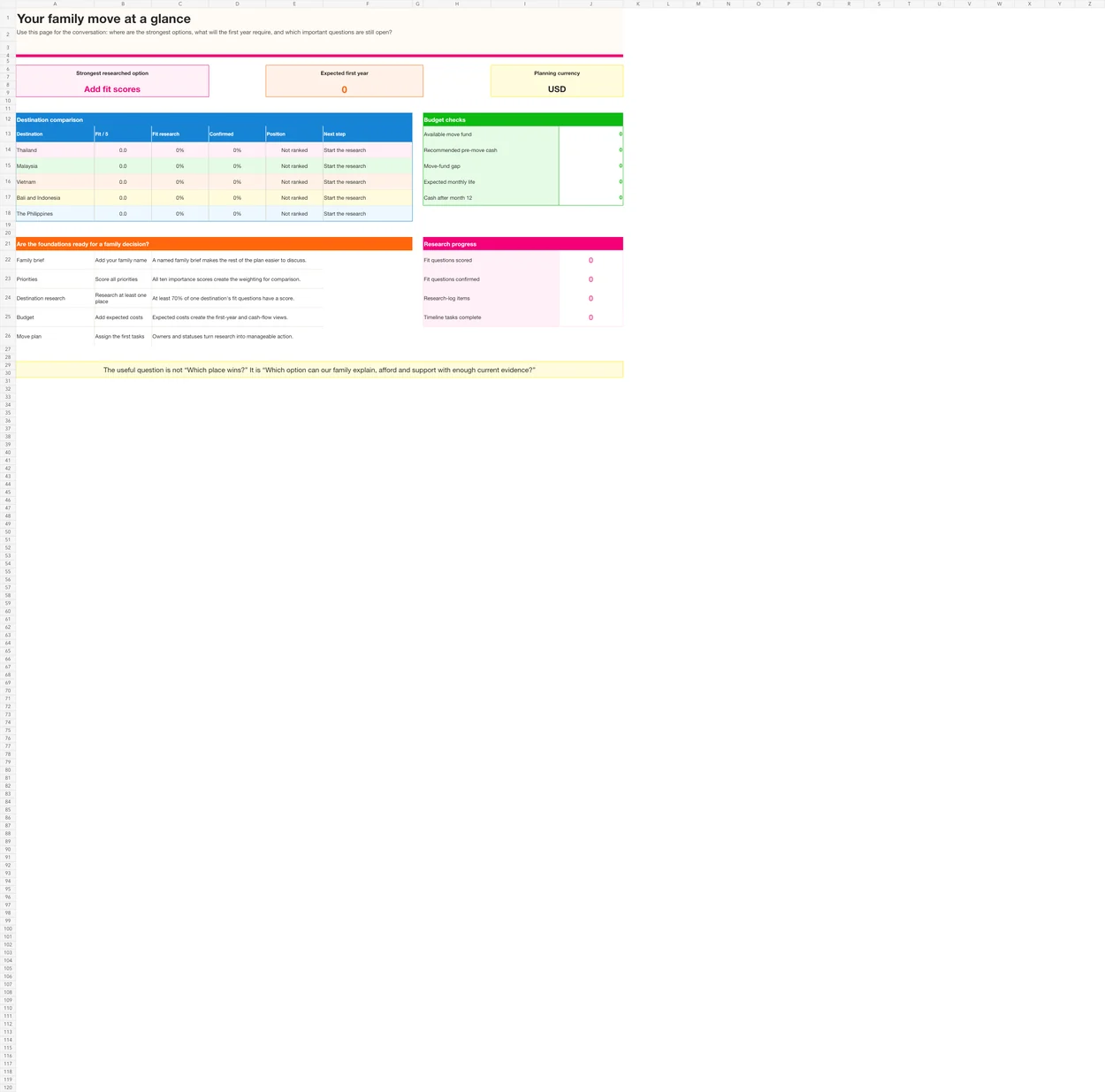
The Family Move Planner keeps your destination comparison, family priorities, budget, sources, questions and timeline in one organised system.
£39one-time digital purchase
Common questions
Questions families ask about moving abroad with teenagers
When should we tell our teenager we are moving abroad?
Tell them once the possibility is real and before every meaningful choice has closed. Share what is known and unknown, explain the adult responsibility for the final decision and create more than one conversation.
Should teenagers get a veto over an international move?
Family circumstances differ, but their view should carry real weight because the move affects education, friendships and identity. Be clear about which decisions are fixed and offer genuine choices within workable boundaries rather than a false vote.
Is it better to move between school years?
Often, but not always. Qualification programmes, exam entries, credits and destination calendars can make a different point safer. Ask both schools to map the individual student's route before fixing the date.
How can teenagers keep friendships after moving?
Help them choose the relationships they most want to protect, agree contact times that respect sleep, and budget for realistic visits where possible. Expect friendships to change while continuing to value them.
What if my teenager refuses to join activities?
Avoid filling every day or forcing instant enthusiasm. Start with one familiar interest or low-pressure repeated setting, explore practical barriers and give it time. Persistent withdrawal alongside other concerning changes deserves support.
How much culture shock is normal for teenagers?
Sadness, frustration, tiredness and missing home can be understandable, and adjustment is not linear. Severity, duration and effect on sleep, eating, school, relationships and safety matter more than a fixed timetable.
Can our existing therapist continue online after the move?
Do not assume so. The clinician's licence, professional rules, insurance, emergency arrangements, privacy platform, time zone and the law where the teenager is physically located can affect telehealth. Confirm it in writing.
What signs mean we should seek urgent help?
Seek prompt professional help for self-harm, suicidal thoughts, severe hopelessness, psychosis, dangerous substance use, inability to function or any situation where someone cannot stay safe. In immediate danger, call the destination's emergency service or go to the nearest appropriate emergency department.