
Healthcare · routines · a gentler first month
Moving abroad with a baby or preschooler
Young children may not understand the map, but they feel changes in people, routines, sleep and their parents' stress. A calm move starts with safe travel and healthcare, then rebuilds a small number of familiar daily anchors.
Last verified 11 September 2026
The short answer
Start with what your family needs to protect
Plan around care rather than luggage. Confirm passports and immigration, arrange a paediatric travel-health review, carry a concise child health and vaccination record, secure age-appropriate travel restraints and know where routine and emergency care will happen. Keep sleep, comfort, feeding and familiar caregiver routines as steady as the journey allows.
Keep the decision grounded
Four things to protect throughout the move
Use these priorities when comparing destinations, schools, care and timing. A plan that works on paper still needs to work in an ordinary family week.
Health continuity
Know the vaccination, growth, feeding, allergy, medication and follow-up plan, with records a new clinician can understand.
Safe transport
Check airline-approved restraints and arrange a suitable child seat for every road journey rather than assuming one will be available.
Familiar care
Preserve a few reliable sleep, meal, comfort and caregiver signals through temporary accommodation and the first weeks.
Caregiver capacity
Plan rest, backup care, realistic unpacking and help for both parents; a smooth child transition depends partly on supported adults.
A practical sequence
Work through the decision in a calmer order
Each stage produces a useful answer, record or agreement before the family takes the next step.
- 01Six to twelve weeks before
Book the health and document review
Check passports, visas, custody or travel consent, vaccinations, medical needs, prescriptions, formula or feeding equipment and flight fitness where relevant.
- 02Before booking the journey
Design the safe travel chain
Confirm bassinet or seat arrangements, airline restraint rules, transfers, child seats, baggage allowances, feeding and medication access during delays.
- 03First week
Rebuild only the essentials
Set up safe sleep, feeding, nappies or toilet access, medicines, cooling, mosquito protection and a quiet familiar corner before ambitious outings.
- 04First three months
Add care and community slowly
Introduce childcare, playgroups, language and new caregivers at a pace the child can manage, while completing routine health follow-up.
Five anchors for a small child
Make the new place feel predictable
The furniture and language can change while familiar signals tell the child what happens next.
A familiar person
Keep the main caregiver handovers calm and predictable, with photos or video for important people who remain far away.
A familiar rhythm
Use the same simple order for waking, meals, rest and bedtime even when the clock shifts gradually.
A familiar object
Carry a safe comfort item, favourite book or sleep cue in hand luggage rather than the shipment.
A familiar response
Use the same words, gestures and comfort when the child is tired, frightened or overwhelmed.
Turn reassurance into something useful
Write down the answer you can actually rely on
Keep names, dates and documents with the answer. General promises are difficult to use when staff, circumstances or countries change.
| Plan | Before leaving | After arrival |
|---|---|---|
| Healthcare | Travel consultation, record, medicines, insurance and first clinic | Register or establish care, continue schedule and confirm emergency route |
| Feeding | Journey supply, safe preparation plan, allergy information and backup | Reliable water, refrigeration, familiar foods and local product checks |
| Sleep | Safe portable setup, airline plan and familiar cues | Cooling, blackout, noise, insects and a gradual local rhythm |
| Transport | Approved flight restraint and confirmed transfer seat | Correct child restraint, installation and safe regular journeys |
| Childcare | Shortlist safeguarding, staffing, routines, illness policy and cost | Visit, settle gradually, review communication and the child's response |
Pause and check
Signs that the plan needs a closer look
One concern does not always end the move, but it should produce a clearer answer before the family commits.
A promised child seat with no details
Ask for the standard, size, condition, installation and vehicle compatibility. Bring an approved seat where the full journey cannot be verified.
Changing formula without a plan
Brand names and formulations vary. Discuss medically important feeding needs, safe preparation and an appropriate transition with the child's clinician.
Routine care left until illness
Know the first paediatric clinic, after-hours advice, emergency department, insurer process and transport before a fever or injury occurs.
A full social calendar immediately
Heat, jet lag, unfamiliar people and new sleep can exhaust a young child. Build quiet recovery into the first weeks.
Research from home
Six useful things to organise before moving
These actions reduce pressure after arrival and make provider conversations more specific.
Build the child's travel folder
Include passport, visa, birth and custody documents, travel consent, vaccination record, health summary, prescriptions, allergy plan and insurance contacts.
Pack a delay-proof care bag
Carry suitable food or feeding supplies, nappies, clothing, comfort, medicines, thermometer and essentials for longer than the scheduled journey.
Check every medicine
Use generic names, original packaging and required letters; verify destination and transit import rules, storage and a lawful replacement route.
Plan safe sleep
Confirm the actual cot or sleep space, mattress, room temperature, mosquito protection and what can be carried if accommodation changes.
Shortlist childcare properly
Review registration, safeguarding, staff checks, ratios, first aid, sleep, food, allergies, illness, pickup authority and communication.
Protect the carers
Arrange shifts, rest, food, emergency contacts and practical help. Add postnatal or mental-health continuity where either parent needs it.
What changes by destination
Confirm the local system before relying on the plan
Regional guidance can organise the questions. Only the responsible authority, institution or appropriately qualified professional can confirm how the current local rules apply.
Vaccination schedule
Compare the child's current record with destination and travel recommendations. An early travel dose may not replace later routine doses.
Food, water and formula
Check reliable products, safe water, sterilising, refrigeration and allergy labelling. Do not assume an identical package means an identical formulation.
Heat, mosquitoes and air
Plan age-appropriate sun, heat, hydration, mosquito and air-quality protection with clinical advice where the child is very young or medically vulnerable.
Registration and status
Confirm birth certificate use, immigration, dependent reporting, healthcare registration and childcare or preschool rules for the child's nationality and age.
Save these questions
Questions to answer before the move becomes fixed
Use the people and institutions named in each question. “It should be fine” is not a complete answer for a high-value family decision.
- 01
Is the child fit for this journey and are vaccinations timed properly?
- 02
Which documents and consent will every border and airline need?
- 03
How will the child be safely restrained on the aircraft and each road transfer?
- 04
Where will safe sleep, feeding and medicine storage happen on the first night?
- 05
Which paediatric clinic, emergency department and insurer route will we use?
- 06
Can we obtain the child's normal foods, formula, nappies and medicines reliably?
- 07
How will childcare verify safeguarding, pickup, illness and allergy arrangements?
- 08
Which familiar routines can remain steady while everything else changes?
Bring the research together
Ready to turn your research into a family move plan?
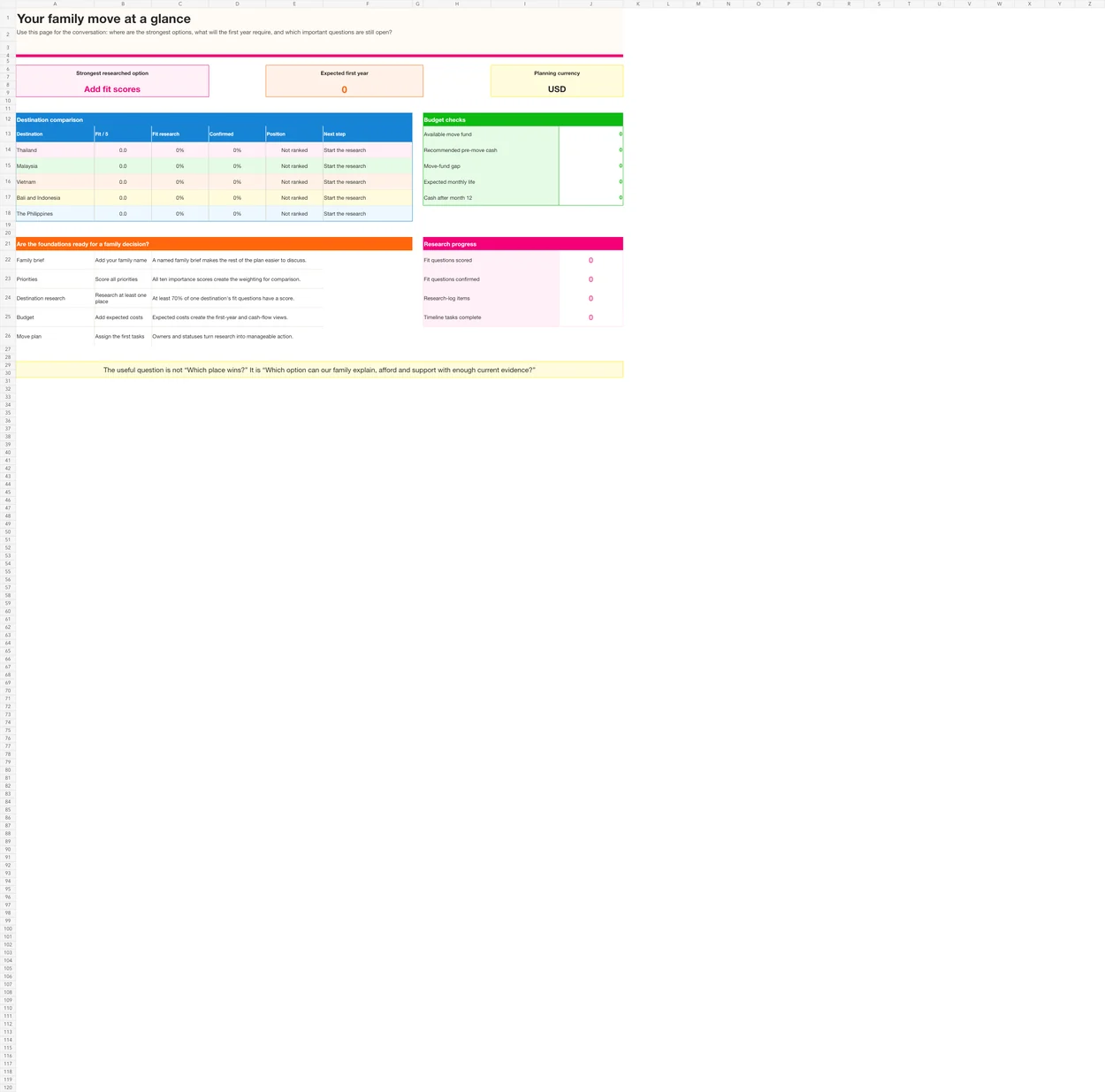
The Family Move Planner keeps your destination comparison, family priorities, budget, sources, questions and timeline in one organised system.
£39one-time digital purchase
Common questions
Questions families ask about moving abroad with a baby or preschooler
How early should we plan an international move with a baby?
Begin once the route is realistic. Passport, immigration and custody documents can take time, while a travel-health professional may need enough weeks to plan age-appropriate vaccines or follow-up. Very young or medically complex babies may need specific flight advice.
Is flying safe for a newborn or baby?
Air travel is safe for most healthy infants and children, but airline minimum ages vary and some heart, lung, premature or other medical circumstances need clinical review. Ask the child's clinician and airline for the individual journey.
Should a baby have their own aircraft seat?
The CDC and FAA advise that an approved child restraint is the safest place during flight, because an adult may not be able to hold a child in severe turbulence. Check the airline, aircraft seat and approved device before booking.
Can travel vaccines be given early?
Some routine vaccines can be accelerated and certain travel doses may be recommended from a younger age. An early dose may not count towards the routine series. A paediatric travel-health professional should plan the schedule for the child and destination.
How do we manage formula abroad?
Research the exact formulation, reliable supply, safe water, sterilising and refrigeration before moving. Do not assume a familiar brand has the same ingredients in every market. Discuss a necessary change or specialist formula with the child's clinician.
How can we help a toddler understand the move?
Use simple repeated language, photos, play and a short sequence: pack, travel, new home, familiar people remain available. Let them help with a small bag and keep a few safe comfort and bedtime cues consistent.
When should a preschooler start childcare after arrival?
There is no universal timetable. Consider jet lag, health, the child's temperament, the caregiver's work and the setting's settling process. A gradual start can help when available, but first verify safeguarding and care quality.
What belongs in the child's hand luggage?
Carry identity and health documents, required medicines, feeding and nappy supplies, spare clothes, a safe comfort item and enough essentials for disruption. Follow airline security, medicine, formula and equipment rules.