
Children · decisions · documents that work across borders
Wills, guardianship and emergency authority when moving abroad
Families need more than emergency phone numbers. If a parent dies, becomes seriously ill or cannot be reached, the right people may need legal authority to care for children, access money, speak to schools and clinicians or deal with property in more than one country.
Last verified 11 September 2026
The short answer
Start with what your family needs to protect
Review the family's wills, guardianship wishes, parental responsibility, travel consent, financial and health authority in every country that matters: the origin, destination, citizenship countries and anywhere assets are held. A document valid at home may need different wording, witnessing, notarisation, legalisation, translation or a local counterpart abroad. Naming a guardian in a will is important, but it does not guarantee an immediate or automatic cross-border outcome.
Keep the decision grounded
Four things to protect throughout the move
Use these priorities when comparing destinations, schools, care and timing. A plan that works on paper still needs to work in an ordinary family week.
Children are cared for immediately
Choose nearby emergency carers and longer-term guardian candidates, then check what authority each would actually need.
Adults can make urgent decisions
Plan healthcare, school, travel, housing, banking and business authority for incapacity or temporary unavailability.
Documents can be found and used
Keep originals, certified copies, translations, adviser details and a plain-language index where trusted people can access them.
Plans agree across countries
Coordinate wills and authority documents so a new local document does not unintentionally revoke, contradict or weaken an existing one.
A practical sequence
Work through the decision in a calmer order
Each stage produces a useful answer, record or agreement before the family takes the next step.
- 01Map
List the people, countries and assets
Record citizenship, habitual residence, parental responsibility, court orders, children, possible carers, homes, businesses, accounts, insurance and digital assets.
- 02Choose
Separate immediate care from long-term guardianship
The person who can reach the child tonight may not be the person the parents want to raise them. Nominate alternatives and discuss willingness, location, immigration, health and finances.
- 03Create
Put the right authority in the right document
Wills, powers of attorney, advance healthcare documents, school permissions and travel consent serve different purposes and may end or begin at different events.
- 04Maintain
Review after every material change
A move, birth, separation, death, new asset, changed citizenship or chosen person's relocation can alter the plan.
Turn reassurance into something useful
Write down the answer you can actually rely on
Keep names, dates and documents with the answer. General promises are difficult to use when staff, circumstances or countries change.
| Document or plan | What it may do | What it does not automatically do |
|---|---|---|
| Will | Direct estate administration and express guardian wishes after death under the relevant law | Give another adult present authority while the parent is alive and capable |
| Guardian nomination | Tell the responsible court or authority whom parents want considered | Override the child's best interests, another parent's rights or local court process |
| Power of attorney | Authorise stated financial or legal acts during the adult's lifetime | Continue after death or work abroad without recognition and form checks |
| Healthcare authority | Appoint a person or record wishes where the relevant law recognises it | Guarantee a foreign hospital can follow a home-country form |
| Travel consent | Evidence permission for a particular child and journey | Transfer custody, replace a passport or answer every destination exit rule |
| Emergency care sheet | Give carers practical contacts, routines, allergies, medicines and instructions | Create legal guardianship or broad financial authority |
Pause and check
Signs that the plan needs a closer look
One concern does not always end the move, but it should produce a clearer answer before the family commits.
One internet template for every country
Execution, wording, witnesses, notarisation, legalisation, translation and recognition can differ. Convenience is not cross-border validity.
Conflicting wills
A later will can revoke an earlier one unintentionally. Country-specific wills need coordinated scope and express advice about interaction.
A guardian who has not agreed
Discuss the role, location, immigration, other children, beliefs, health, money and alternatives. A name on paper is not a workable plan by itself.
Originals no one can reach
Security matters, but an inaccessible will, power or policy can fail at the moment it is needed. Tell trusted people where the usable documents are held.
Research from home
Six useful things to organise before moving
These actions reduce pressure after arrival and make provider conversations more specific.
Make a family authority map
For school, health, travel, home, money, business and children, record who can decide normally, during temporary absence, incapacity and after death.
Choose primary and backup people
Name alternatives for executors, guardians and attorneys, and check their willingness, location and ability to act across borders.
Coordinate qualified advice
Start with an adviser who understands cross-border estates, then obtain destination advice for local assets, guardianship, capacity and recognition.
Prepare public documents properly
Ask the receiving institution whether it needs an original, certified copy, apostille or legalisation and translation, and in which order.
Create the emergency care folder
Include identity, relationship and custody evidence, school and health contacts, allergies, medicines, insurance, routines and who may collect or consent.
Fund the plan
Review life and disability cover, beneficiaries, accessible emergency money, trusts where appropriate and the practical cost of a guardian relocating or caring for children.
What changes by destination
Confirm the local system before relying on the plan
Regional guidance can organise the questions. Only the responsible authority, institution or appropriately qualified professional can confirm how the current local rules apply.
Guardianship and parental responsibility
Ask which court or authority decides, how a will nomination is treated, whether another parent has rights and what a temporary carer can do.
Succession and tax
Check domicile or connecting factors, forced-heirship or reserved-share rules, matrimonial property, local assets, probate and tax in every relevant system.
Capacity documents
Confirm whether financial and healthcare powers made elsewhere are recognised, require registration or should be replaced or paired with a local document.
Document authentication
Check whether both countries use the Apostille Convention for the document, or whether consular legalisation and an approved translation are needed.
Save these questions
Questions to answer before the move becomes fixed
Use the people and institutions named in each question. “It should be fine” is not a complete answer for a high-value family decision.
- 01
Who has parental responsibility now and are there any court restrictions?
- 02
Who could care for the children tonight, and who should raise them long term?
- 03
How would the preferred guardian enter or remain in the child's country?
- 04
Which wills cover which assets, and can one revoke another?
- 05
Who can handle money, healthcare, school and business during incapacity?
- 06
Will each institution recognise the document and what authentication does it require?
- 07
Where are originals and who knows how to reach them?
- 08
What changed since the plan was last legally reviewed?
Bring the research together
Ready to turn your research into a family move plan?
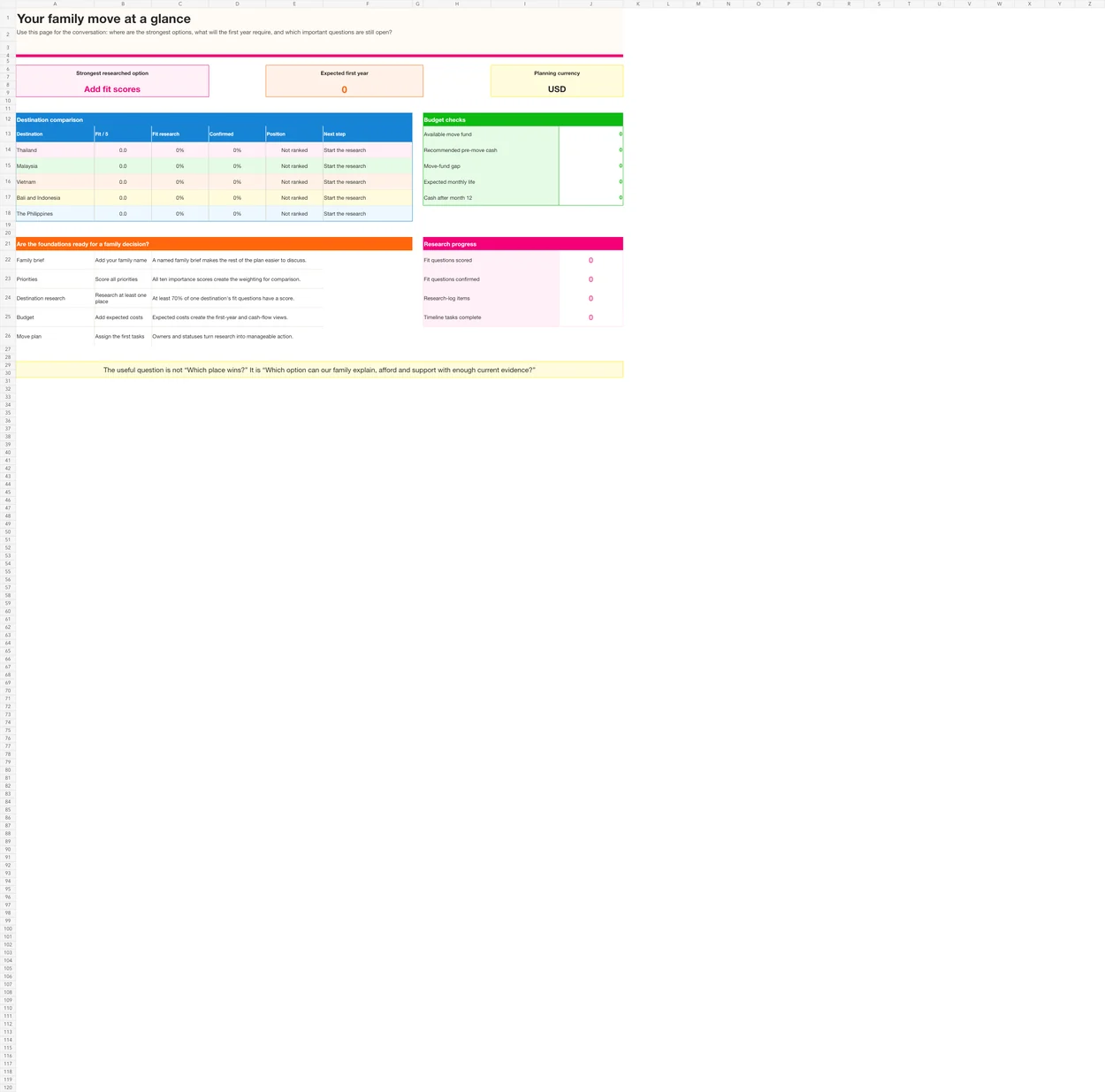
The Family Move Planner keeps your destination comparison, family priorities, budget, sources, questions and timeline in one organised system.
£39one-time digital purchase
Common questions
Questions families ask about wills, guardianship and emergency authority when moving abroad
Does naming a guardian in a will guarantee they will care for our children?
It records the parents' wishes and can be very important, but the effect depends on the applicable law, another parent's rights and the child's best interests. A court or authority may need to confirm the appointment, especially across borders.
Do we need a new will when moving abroad?
You need a cross-border review. An existing will may remain useful, need amendment or need a coordinated local will for certain assets. Do not sign a second will until advisers have confirmed that it will not revoke or conflict with the first.
What is emergency authority for a child?
It is a practical description, not one universal document. Schools, clinicians and authorities may require different permissions for pickup, routine care, urgent treatment, travel or longer-term caregiving. Ask each institution what it recognises.
Can grandparents make medical decisions while we travel?
Only if the relevant law and provider accept the authority they hold. Give clear contacts and practical information, but ask the destination clinician, insurer and a lawyer whether a particular consent or legal document is needed.
Do we need a travel consent letter?
Some countries, airlines and circumstances require consent from a non-travelling parent or evidence of sole authority. Check every departure, transit and arrival country and carry relationship and custody evidence where advised.
Will a power of attorney work in another country?
Not automatically. The receiving bank, authority or other institution may apply local form, registration, translation, authentication and capacity rules. Ask the institution and local lawyer before relying on it.
What is an apostille?
It authenticates the origin of a public document for use between countries where the Apostille Convention applies; it does not confirm the document's legal effect or content. Check the current country status and the receiving authority's requirements.
Where should we store wills and emergency documents?
Keep originals in secure professional or other appropriate storage, tell executors and trusted people where they are, and maintain accessible certified or working copies and an index. Avoid placing the only usable copy behind an account no one else can access.