
Family budgets · five destinations
The real cost of living in Southeast Asia for a family
Southeast Asia can offer families excellent value, but rent and everyday food do not tell the whole story. A realistic budget also includes school, a suitable home, transport, private healthcare, visas and the cost of setting up life in a new country.
Last verified 31 August 2026
The short answer
How much does a family need?
Across our five destinations, a useful starting range is £1,600–£5,500+ a month for a family of four including one international-school place. Your choice of school, city, home and daily travel will determine where your family sits within that broad range.
Comparable family budgets
Family cost by destination
These ranges are deliberately broad and were last researched in August 2026. They describe a comfortable family setup rather than luxury living or a solo traveller's budget.
| Destination | Monthly family range | School planning range | The factor most likely to move it |
|---|---|---|---|
| 🇹🇭 Thailand | £2,000–£4,600/mo | about £6,000–£13,000/yr | No single long-stay visa fits every remote-working family; status must match work and study |
| 🇲🇾 Malaysia | £2,000–£4,700/mo | about £3,800–£20,000/yr | MM2H involves substantial fixed deposits and compulsory property purchase; DE Rantau is time-limited |
| 🇻🇳 Vietnam | £2,000–£4,700/mo | about £8,700–£31,000/yr | A 90-day e-visa is not a long-term family residence or work solution |
| 🇮🇩 Indonesia (Bali) | £3,100–£5,500/mo | about £9,500–£14,000/yr | Traffic, wet-season disruption, specialist healthcare and exact visa/work permissions |
| 🇵🇭 The Philippines | £1,600–£4,000/mo | about £2,800–£22,000/yr | School/healthcare quality and transport reliability vary sharply by location |
What to include in the family budget
Start with the costs your family cannot avoid
This is a suggested order, not a percentage split. Research each cost for your chosen city and providers before adding optional lifestyle spending.
Tuition, compulsory fees, transport and support
Rent, deposit, utilities, internet and school-run location
Premium, excess, outpatient spend and evacuation
Visa, renewals, reporting, legalisation and professional help
Food, transport, activities, travel and contingency
What changes the answer
Six cost drivers that matter more than national averages
School tier
A premium school can cost several times a value option. Compare the complete first-year invoice for the child's exact year group.
Where you live in relation to school
A cheaper home farther away may require a car, driver or hours of family time. Include the cost of a manageable school journey.
Number and age of children
Sibling discounts rarely cancel a second place; nursery, primary and secondary fees can differ sharply.
Medical needs
Age, history, geography, deductible and US cover can matter more than the country headline.
Transport pattern
Bangkok rail access, a Malaysian car, Bali drivers or inter-island Philippine travel create different totals.
Imported habits
Imported groceries, Western restaurants, overseas trips and international brands can erase much of the local-price advantage.
Costs before everyday life settles down
The expenses that arrive before your monthly budget begins
Keep a separate fund for setup costs, and avoid paying for one part of the move before the decisions it depends on are confirmed.
- Before approvalResearch, scouting, document copies, legalisation and applications
- Before schoolApplication, assessment, enrolment, capital/development and deposit charges
- Before the leaseTemporary stay, rental deposit, utility setup, furniture and transport
- Before arrivalFlights, insurance, medicines, devices and an emergency/return reserve
Avoid the double commitment: do not sign a long lease solely because a school application is underway, and do not pay irreversible school charges on an assumed visa route. Ask both providers what happens if the other approval fails.
A budget you can check and update
Keep three details beside every number
Name the school, insurer, property and route. Save the dated link or written quote.
Keep the actual local or foreign-currency amount and payment schedule.
Use a dated conversion in your selected currency and test an adverse exchange-rate scenario before committing.
- Separate recurring costs from first-year charges.
- Model each child and each currency separately.
- Show annual, termly and monthly cash-flow dates.
- Keep contingency and return money outside lifestyle spend.
Take the next step
Open the country budget that matches your shortlist
New city-by-city family budgets
See what family life can cost in six priority cities
These detailed guides use local-currency source prices, three complete family scenarios and a downloadable worksheet. They include one international-school place and keep relocation setup separate from monthly life.
Bring the research together
Ready to turn your research into a family move plan?
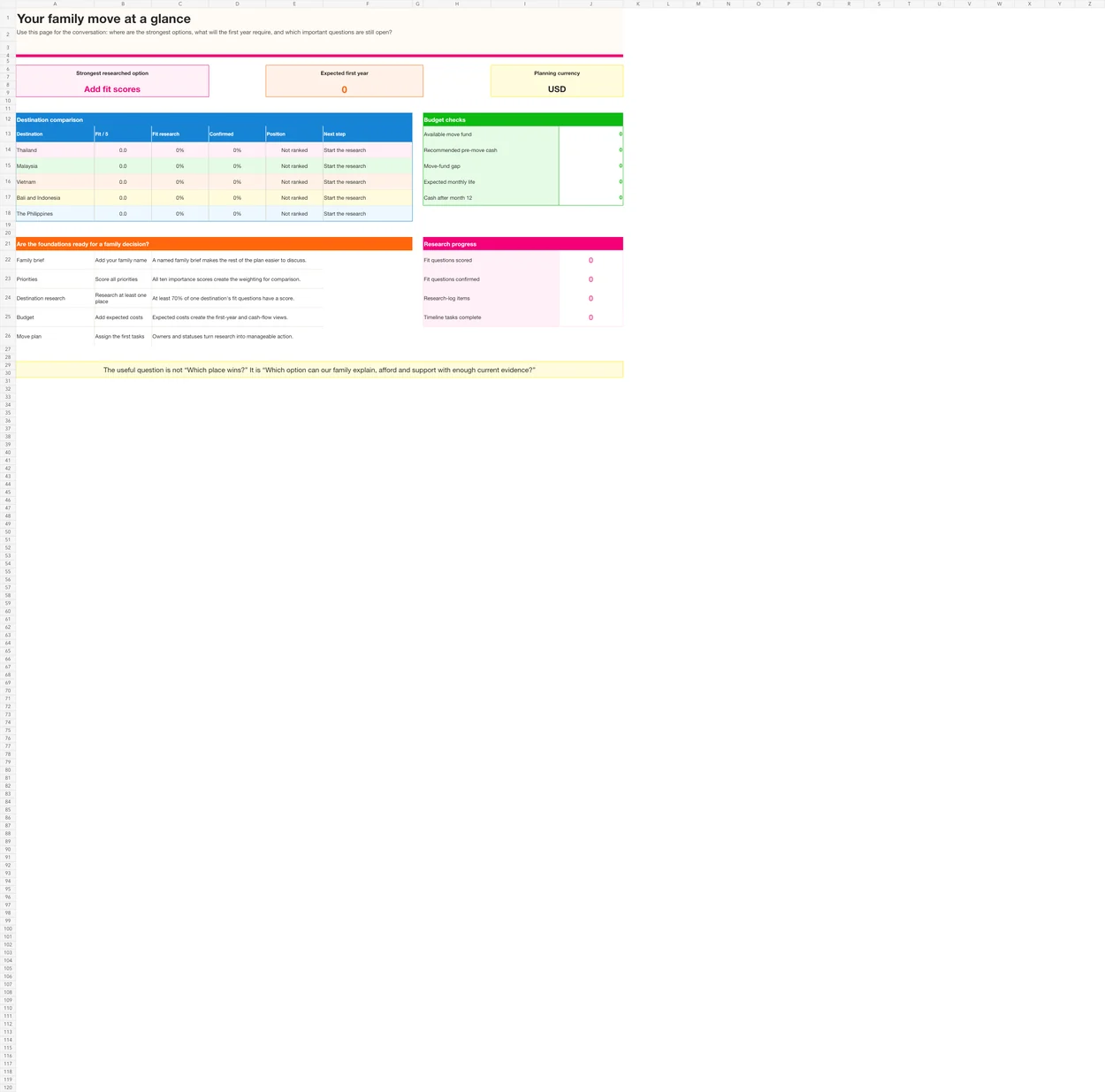
The Family Move Planner keeps your destination comparison, family priorities, budget, sources, questions and timeline in one organised system.
£39one-time digital purchase
Common questions
Questions about cost of living
Which Southeast Asian country has the lowest starting budget for a family?
The Philippines has the lowest floor in our researched comparison, including an international-school scenario. Thailand, Malaysia and Vietnam follow, while Bali starts higher. City, school tier and number of children can reverse that ordering.
Do the SettleHappy monthly ranges include school fees?
Yes. The ranges are for a family of four and include international school because omitting it produces a misleading relocation budget. They remain planning ranges rather than quotes, and premium schools or two high-fee places can push a family above them.
Why are the ranges so wide?
School fees, housing near school, transport and private health cover vary far more than basic groceries. A broad explained range is more honest than a precise regional average that no real household lives.
How should we convert annual school fees into a monthly budget?
Add compulsory first-year charges separately, then divide recurring tuition and predictable annual costs by 12 for cash-flow planning. Keep the actual payment dates visible because many schools collect by term or in advance, not monthly.
What first-year costs sit outside the monthly range?
Common examples include flights, temporary accommodation, visa and agent charges, school application/enrolment/capital fees, rental deposits, insurance setup, furniture, document legalisation and an emergency or return reserve.
Which currency should we use for the budget?
Build the operating budget in each contract's billing currency, then use your chosen SettleHappy display currency for a dated planning comparison. School contracts may mix currencies, so model each contractual currency rather than assuming everything moves together.
How much contingency should we hold?
There is no universal percentage. Hold enough for your largest plausible shock: a school payment, insurance excess, medical deposit, urgent flight, visa delay or move between homes. Keep a separate return reserve rather than treating available credit as the plan.
Can we rely on a digital-nomad budget online?
Usually not. Solo budgets often exclude children, school, larger housing, insurance, visa costs and school-run transport. Use them only for individual price clues, then rebuild the family version from named providers and your actual city.