
Private care · insurance · medical continuity
Healthcare planning for a family move to Southeast Asia
Healthcare quality can vary greatly within the same country. The practical questions are whether your child can reach the right clinician during an ordinary week and whether your family can fund and coordinate urgent or complex care at any hour.
Last verified 31 August 2026
The short answer
Can families get good healthcare in Southeast Asia?
Yes, particularly in major cities with established private hospitals, but the range of care becomes less consistent elsewhere. Thailand and Malaysia offer the greatest depth in this five-country comparison. For any destination, identify routine care, emergency access, more specialist treatment, insurance and medical evacuation for the exact city you are considering.
Country and city matter together
The five-country healthcare comparison
This is a planning view, not a hospital ranking. Individual facilities, doctors, insurer networks and capabilities change.
Thailand
Bangkok has the widest choice of private hospitals; Chiang Mai and Phuket have established private options, but complex cases may still mean travel to Bangkok.
Read the healthcare guideMalaysia
Kuala Lumpur and Penang have broad private-hospital choice; Johor has established options, with Singapore sometimes considered for specialist care at a very different price point.
Read the healthcare guideVietnam
Private hospitals and international clinics are concentrated in Hanoi and Ho Chi Minh City. More complex treatment or medical evacuation can still be necessary.
Read the healthcare guideIndonesia (Bali)
Bali has private hospitals and clinics, but complex paediatric, trauma or specialist care can require transfer to Jakarta, Singapore or elsewhere. Insurance must contemplate that journey.
Read the healthcare guideThe Philippines
The strongest private hospitals and specialist services cluster in Metro Manila, with credible care in Cebu and other major centres. Remote-island access can be much thinner.
Read the healthcare guidePlan each level of healthcare
Know where you would go for different needs
Saving one hospital on a map is not enough. Start with care close to home, then identify where you would go for urgent and more specialist treatment before it is needed.
Everyday
GP/family doctor, paediatrics, dental, optical, pharmacy and routine prescriptions.
Urgent
24-hour emergency department, ambulance route, deposits and insurer direct billing.
Specialist
Named paediatric or adult speciality, diagnostics, surgery and follow-up.
Medical transfer
Receiving city or country, authorisation, accompanying parent and repatriation.
Decide what insurance needs to cover
Compare the total possible annual cost, not only the premium
A difficult but realistic year
Premium + deductible + co-pay + exclusions + uncovered care
The cheapest premium can lead to the highest costs when someone needs treatment. Work out what your family could actually have to pay.
- Geography
- Local, regional, worldwide excluding US, or worldwide?
- Hospitals
- Are the facilities you would choose in-network and direct-billing?
- Limits
- Annual, per-condition, room, cancer, maternity and evacuation caps?
- History
- What is excluded, costs extra, covered after a wait or accepted in writing?
- Family detail
- Child outpatient care, congenital conditions, mental health and therapies?
- Medical transfer
- Evacuation, repatriation, accompanying parent and insurer decision process?
Some families self-fund predictable outpatient care and insure major events; others prefer comprehensive direct billing. The right structure depends on cash reserves, usage and risk tolerance—not a generic “best policy.”
Prepare before departure
Take a clear family medical history with you
- Diagnoses, operations, allergies and significant history
- Medicines by generic name, dose and prescriber
- Vaccination record and destination travel-health assessment
- Recent clinic letters, imaging, results and care plans
- Dental, optical, therapy and additional-support information
- Insurer numbers, assistance line and consent/guardianship documents
Medicines cross borders under local law. Check controlled-drug/import rules and lawful local supply using the generic name. A home-country prescription or repeat arrangement does not automatically transfer.
The home and location affect family health
Check environmental risks by city and season
Air
Seasonal smoke and urban pollution can change outdoor life. Compare monitoring, school policies, filtration and an individual respiratory plan.
Mosquitoes
Dengue and other vector risks vary by place and season. Use current health advice plus household prevention.
Weather
Floods, typhoons and severe weather can interrupt power, roads, medicines and access to care.
Home
Inspect water, drainage, humidity, mould, ventilation, pool safety and reliable road access.
Roads
Road safety, helmets, child restraints and ambulance response are healthcare considerations, not just transport preferences.
Mental health
Ask what child/adult support exists locally, what insurance covers and how continuity works across time zones or countries.
Country healthcare guides
Explore healthcare in each destination
Family health insurance by destination
Compare the cover rules behind each healthcare system
Move from the regional insurance overview to local regulation, statutory schemes, hospital payment and medical-transfer planning in each destination.
Thailand
Local and international cover, direct billing, exclusions and difficult-year costs.
Malaysia
Local and international cover, direct billing, exclusions and difficult-year costs.
Vietnam
Local and international cover, direct billing, exclusions and difficult-year costs.
Indonesia and Bali
Local and international cover, direct billing, exclusions and difficult-year costs.
the Philippines
Local and international cover, direct billing, exclusions and difficult-year costs.
Two decisions that matter in every country
Make insurance and medical evacuation practical
Bring the research together
Ready to turn your research into a family move plan?
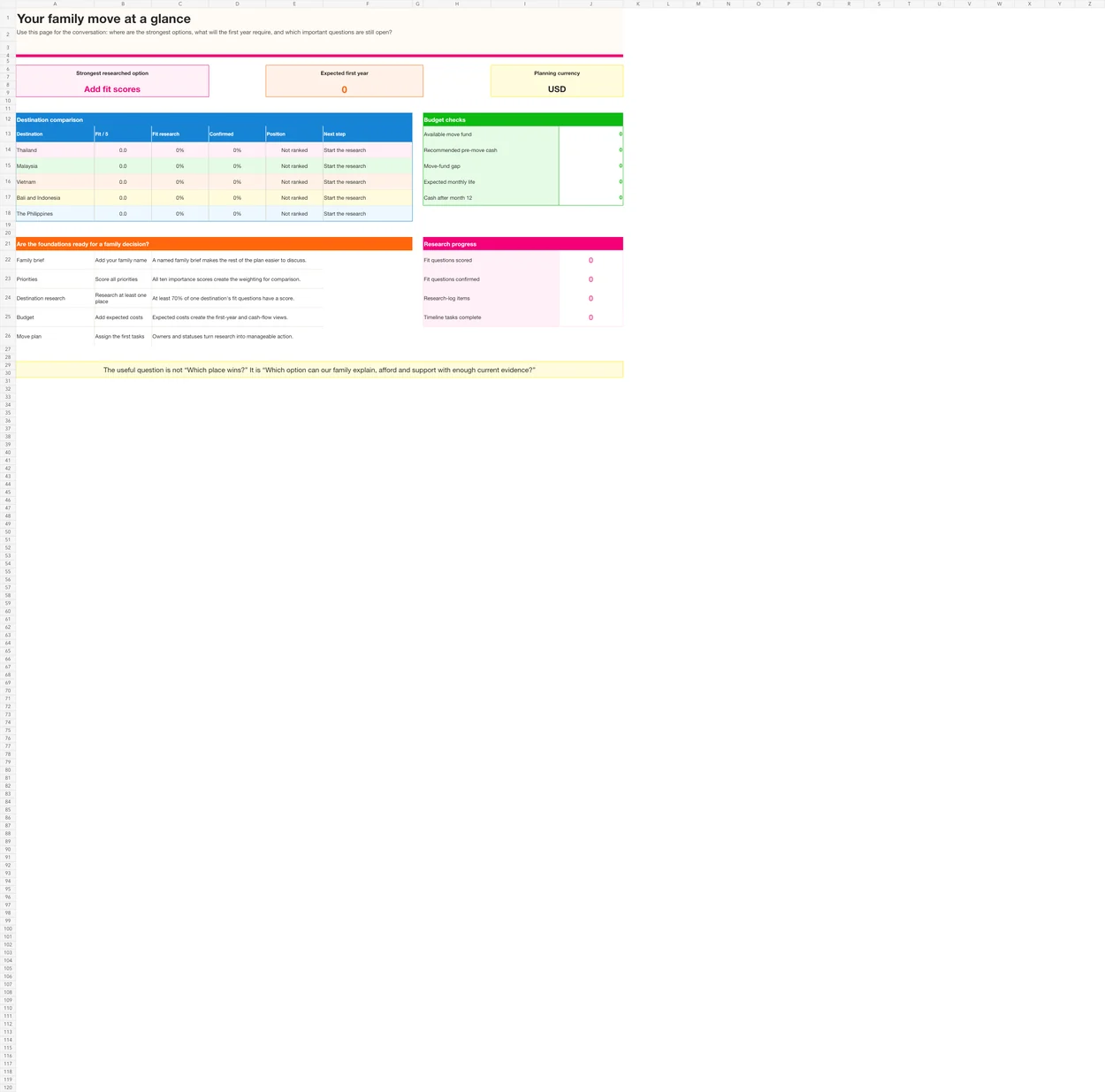
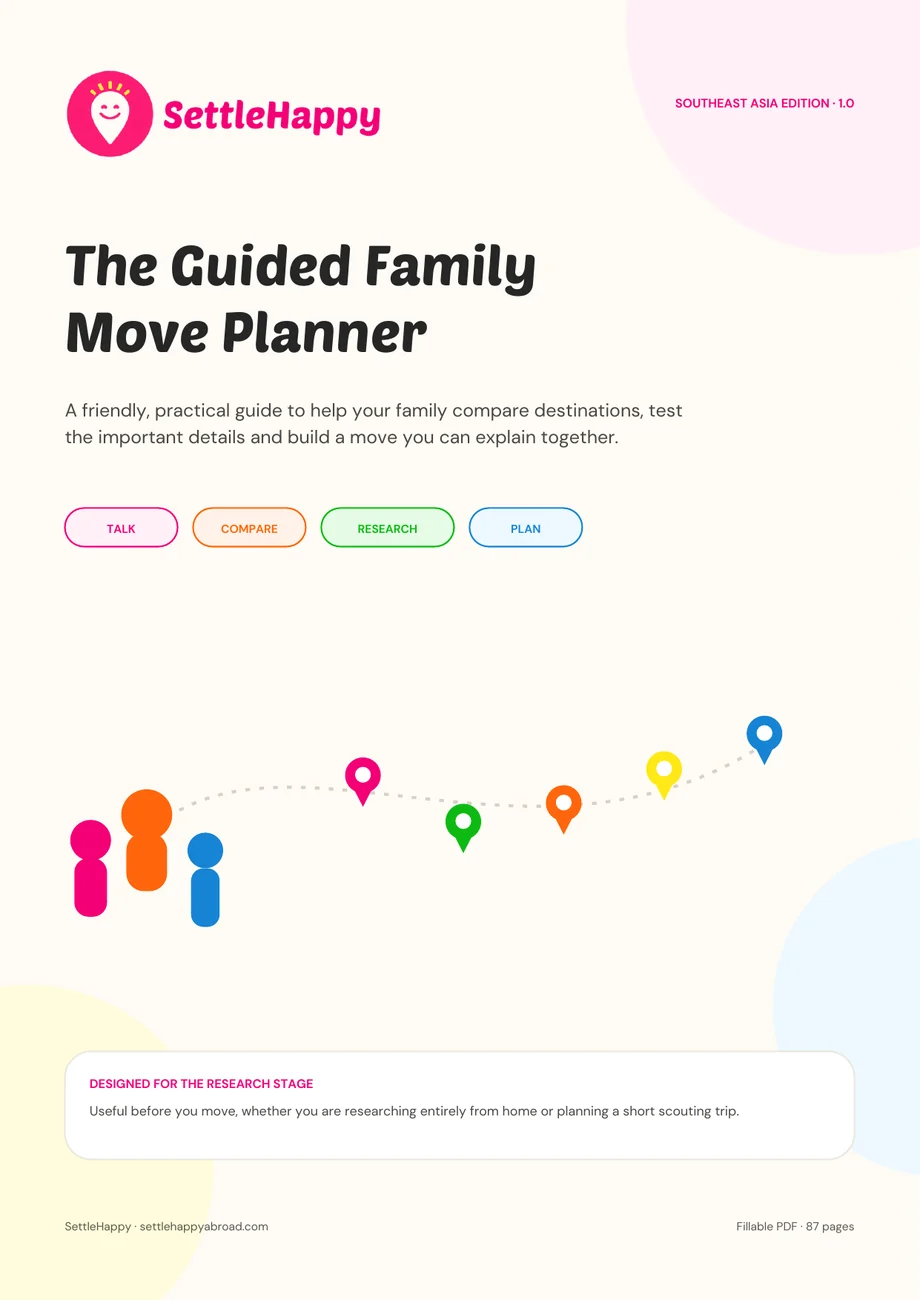
The Family Move Planner keeps your destination comparison, family priorities, budget, sources, questions and timeline in one organised system.
£39one-time digital purchase
Common questions
Questions about healthcare
Which Southeast Asian country has the best healthcare for expat families?
Thailand and Malaysia have the strongest depth of established private care in this comparison, especially Bangkok, Kuala Lumpur and Penang. Major cities in Vietnam and the Philippines also have credible private facilities. Bali and smaller or remote bases require a clearer specialist-transfer plan.
Can expat families use local public healthcare for free?
Do not plan on free treatment or assume home-country cover follows you. Eligibility, charges and enrolment depend on the destination, immigration or employment status and the exact local scheme. Many relocating families combine private providers with insurance or a funded self-pay plan.
Do we need international private medical insurance?
That depends on your finances, destination, visa and medical needs, but every family needs a funded plan for routine, urgent and catastrophic care. Compare insurance against the hospitals and evacuation route you would actually use.
Is travel insurance enough for a permanent move?
Usually not. Short-trip policies commonly limit trip length and may exclude people living abroad. Use a resident-appropriate medical plan for the full period overseas, then check whether separate travel cover is needed for trips, cancellation or baggage risks.
Should outpatient treatment be included?
Some families self-fund predictable consultations and insure major events; others value comprehensive direct billing. Compare premium plus deductible, co-pay, annual limits and expected self-funded care—not premium alone.
What does medical evacuation cover?
Wording varies. Check who decides evacuation is necessary, the origin and permitted destination, transport type, accompanying parent, stabilisation, insurer authorisation and whether repatriation is included. A high headline limit is not enough.
How should we handle regular prescription medicine?
Before moving, ask the prescriber for a medication summary and generic names, check destination import and controlled-drug rules, identify a local specialist and confirm lawful supply. A prescription or repeat arrangement from home does not automatically transfer.
When should children have a travel-health appointment?
Arrange it early: official guidance commonly recommends at least four to six weeks before departure, while longer or complex vaccine schedules may need more time. Check routine vaccines as well as destination, transit, itinerary, duration and medical history.
What environmental health risks change by city?
Examples include seasonal smoke in Chiang Mai, air pollution in Hanoi and Ho Chi Minh City, dengue across tropical areas, and flooding or severe weather in several destinations. Use current official travel-health advice and match location to individual conditions.
What should be in a family medical handover file?
Include concise histories, allergies, diagnoses, medicines by generic name, vaccination records, recent letters/results, dental and optical information, insurance contacts and consent/guardianship documents. Store secure digital copies and a small offline emergency version.