
🇲🇾 Pet relocation · rules before flights
Moving pets to Malaysia
Malaysia's route changes with the pet's origin country, breed and landing point. The safest plan starts with the current DVS country category, then secures the MAQIS permit and any quarantine space before the flight is treated as fixed.
Last verified 12 September 2026
The short answer
Can families move a dog or cat to Malaysia?
Dogs and cats need a valid import permit and an official veterinary health certificate that meets Malaysia's current DVS protocol. The current scheduled/non-scheduled country list affects quarantine and health conditions. Quarantine-required pets may only use entry points with facilities, and Sabah and Sarawak have their own authorities rather than the Peninsular Malaysia route.
The official route
Start with origin, state and breed
Those three facts decide which Malaysian protocol to read and whether the proposed airport can handle the arrival.
Choose Peninsular Malaysia, Sabah or Sarawak
The federal DVS/MAQIS process described here supports Peninsular Malaysia. Contact the relevant state authority directly for Sabah or Sarawak.
Open the current DVS notice
Scheduled and non-scheduled lists can change with disease status. Use the current notice together with the applicable import protocol.
Check prohibited and restricted breeds
A restricted breed may need prior approval; a prohibited breed cannot be solved by a willing airline or relocation agent.
Secure MAQIS permission
Apply through the current route and, where quarantine applies, confirm space before the permit and flight are finalised.
Complete the origin-side endorsement
Arrange the microchip, vaccines, examination and official health certificate to the exact protocol and landing date.
Chip · vaccines · permission · certificate
Make each requirement prove the same journey
Rules can change with origin, disease status, port and travel date. Use the official position below as your starting point, then have the destination authority and departure-country veterinary authority confirm the exact file in writing.
Microchip
ISO 11784/11785 in current protocolsScan before treatment and make the number identical on the permit, health certificate, vaccination record and airway bill.
Vaccinations
Protocol and origin category decide timingCurrent non-scheduled material includes rabies and core vaccines. Read it with the latest DVS country-list notice and ask DVS to resolve any conflict.
Import permit
MAQIS permission before arrivalUse the correct state, port, species and arrival details. A pet arriving without permission may be refused or subjected to official action.
Veterinary certificate
Government-issued and usually within 7 daysUse Malay or English and carry the original. Follow a shorter or different window if the applicable protocol says so.
Build the travel file
Keep originals, scans and names in step
Read the chip before clinical work begins. The pet description, owner or consignee, dates, route and microchip number should agree across government, veterinary and airline records.
Identity and health
- ISO microchip proof
- Current vaccination and treatment records
- Official veterinary health certificate and laboratory results
Permission and category
- Valid MAQIS import permit
- Current DVS scheduled/non-scheduled notice and matching protocol
- Breed approval or CITES permission where applicable
Arrival plan
- Quarantine booking confirmation where required
- Entry-point and flight acceptance in writing
- Local representative and onward transport details
Quarantine and release risk
Plan for the outcome—not only the best case
“No routine quarantine” never means automatic entry. An officer can still inspect, test, detain or refuse an animal when health, identity or paperwork does not meet the current conditions.
Scheduled-country route
DVS material allows exemption for qualifying healthy dogs and cats with complete documents from the current scheduled list. Never use an old list.
Non-scheduled route
Expect quarantine under the applicable protocol. DVS guidance describes at least seven days for other countries, with longer control possible if officials require it.
Wrong port or missing file
Quarantine-required arrivals are limited to entry points with facilities. A wrong landing point, no space or missing original can cause refusal, delay or additional official action.
Airline and transit planning
A legal pet can still be refused at check-in
Government import permission, export certification and airline acceptance are separate approvals. Build the route around the animal—not around the cheapest passenger fare.
Read IATA pet guidanceOperating airline
Confirm cabin, accompanied-baggage or cargo acceptance for the pet, crate, breed, temperature, aircraft and every segment. A codeshare marketing carrier cannot answer for the operator.
Travel container
Measure the standing animal, follow the operating carrier's current IATA-based container specification and practise calm crate time well before departure.
Transit and disruption
Check the scheduled transit and every realistic diversion. Ask who handles the pet if a connection is missed, the flight changes aircraft or cargo cannot be transferred airside.
Welfare plan
Discuss fitness to fly with the vet, avoid routine sedation, plan water and feeding, and choose a route that limits heat exposure, handling stages and long layovers.
Breed, species and local restrictions
Check every layer that can say no
A border authority, transit country, airline, local council, building manager or landlord can each apply a different rule. Exotic pets need species-specific CITES and wildlife checks rather than a dog-and-cat checklist.
Banned and restricted dogs
DVS publishes prohibited and restricted breed categories. Confirm the exact breed and cross-breed position before paying for transport.
Local home rules
Local authorities, strata management and landlords may limit dogs or numbers even after lawful import. Get written housing consent before signing.
Wildlife and exotic pets
CITES and wildlife approval may apply before the veterinary permit. Do not use dog-and-cat guidance for birds, reptiles or exotic mammals.
The first 24 hours
Make arrival calm after a complicated journey
Keep the collection plan simple, leave time for official checks and make one adult responsible for documents while another watches the animal.
Land at the permitted point
The pet should arrive only at the entry point named on the permit; do not improvise a transit through another Malaysian point.
Present the originals
Carry the permit, official certificate and CITES or breed approval where relevant in Malay or English.
Meet quarantine handover
If quarantine applies, confirm collection, food, medicine, visiting and release arrangements before the flight.
Check the home licence
After release, confirm local council, building-management and veterinary registration expectations for the actual address.
Continue the family plan
Connect the pet route to the home and daily routine
Bring the research together
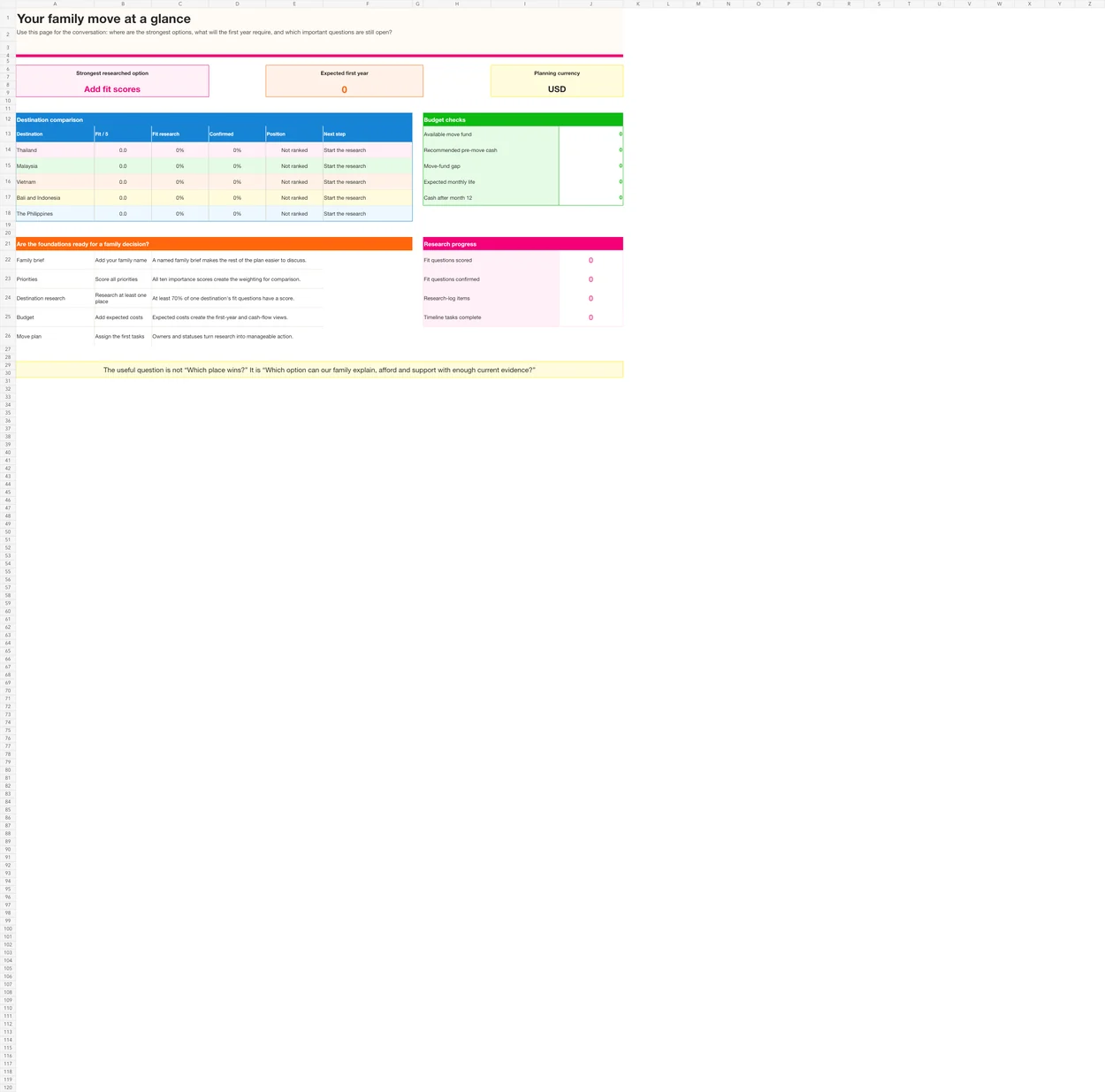
Ready to turn your research into a family move plan?
The Family Move Planner keeps your destination comparison, family priorities, budget, sources, questions and timeline in one organised system.
£39one-time digital purchase
Common questions
Questions about moving pets to Malaysia
How early should we start planning a pet move to Malaysia?
Start several months before the family flight. Vaccination sequences, antibody tests, permits, government-endorsed certificates, quarantine reservations and airline capacity run on different clocks. The route should be checked before any non-refundable ticket is booked.
Can a normal vet issue every document?
A private vet can usually implant or scan a microchip, vaccinate and prepare clinical records. The final export or health certificate may need endorsement or issue by the competent government veterinary authority in the departure country. Confirm that distinction early.
Can our pet travel on the same flight as us?
Sometimes, but cabin, accompanied-baggage and cargo options depend on the operating airline, aircraft, route, pet size and local rules. Ask the operating carrier for written acceptance for every flight segment, not only the ticketing airline.
Should we sedate our pet for the flight?
IATA advises against routine sedation or tranquilisation because of possible adverse effects in transport. Discuss welfare and any medical need with the treating vet and carrier; never medicate solely to make airline acceptance easier.
What if our route changes after the permit is issued?
Stop and recheck the import authority, export authority and airline. A different date, port, transit country, flight number or consignee can invalidate a permit, certificate or quarantine reservation.
Do transit-country rules matter if we stay airside?
They can. A through-airside transfer is not automatically exempt from animal-health, customs or airline-transfer controls, especially when bags or cargo must be collected. Get confirmation for each transit and contingency airport.
Are airline breed restrictions the same as government import restrictions?
No. A country may admit a breed that an airline refuses to carry, while housing, local licensing or insurer rules can add further restrictions. Check all four layers separately.
What should be arranged for the first day?
Confirm who meets the pet, where inspection or quarantine happens, how the crate is collected, pet-friendly transport, a secure home, water and familiar food, and a local vet who can help if the animal is unwell after travel.