
🇮🇩 Indonesia · employment and family status
Work permits and working in Indonesia
Bali follows Indonesian immigration, manpower, tax and business law. A residence permit for family, investment or remote work answers only part of the picture; the person's real duties, employer, clients and business role must fit the permission actually granted.
Last verified 10 September 2026
The short answer
What permission does a family need to arrange?
An Indonesian employer hiring a foreign national generally needs an approved Foreign Worker Utilisation Plan (RPTKA) and the linked immigration process for authorised work. Family E31 status does not create automatic work rights. Qualifying overseas employees can examine the E33G remote-worker route, which should not be used for Indonesian employment or local client work.
Four separate checks
A residence document is only the first layer
Work through these in order for each adult. A positive answer at one level does not fill a gap at the next.
Employer-sponsored work
How the usual local-employment route works
The employer should own the process, explain it clearly and give the worker copies of every approval.
- 01
Employer
Check the employer and position
The Indonesian entity confirms it may employ a foreign worker in the proposed position and for the proposed period, including any sector or occupation restrictions.
- 02
Employer
Obtain RPTKA approval
The employer files the Foreign Worker Utilisation Plan and worker evidence through the current manpower process, including the role, location and period.
- 03
Employer + worker
Complete the linked immigration route
Use the approval and worker data for the appropriate work visa and limited stay permit. Family members need their own linked categories.
- 04
Employer
Meet ongoing conditions
The employer follows reporting, compensation-fund, Indonesian counterpart or training, role and location duties that apply to the case.
Match permission to the real activity
Six working arrangements families often ask about
Job titles alone are not enough. The employer, clients, place of work and day-to-day duties all affect the answer.
RPTKA-led route
Job with an Indonesian company
The employer—not the employee—builds the manpower and immigration approvals around the named position, location and period.
E33G may fit
Remote job with an overseas company
The E33G limited-stay route is designed for qualifying remote workers carrying out duties for a company outside Indonesia.
Do not stretch E33G
Freelance work or local clients
Independent clients, Indonesian customers and local delivery can fall outside an overseas-employer case and raise business and tax questions.
Title and duties matter
Investor or director
An investor stay category and company ownership do not necessarily authorise every operational role. The entity and person need matching approvals.
No automatic work right
Spouse on family status
An E31 family stay route supports residence, not open employment. A hiring company must establish the spouse's own lawful work route.
Check sector and manpower rules
Professional or restricted occupation
Some positions are closed or conditioned, and sector licensing can apply in addition to RPTKA and immigration approval.
Spouses and dependants
Living together does not mean sharing work permission
Family-unification status allows the spouse to reside under the relevant conditions; it should not be treated as an open work permit. Employment, regular services for a family company or local freelance activity needs its own manpower, immigration and tax review.
Plan it early: If both adults expect to work, cost two compliant work routes from the start. Do not let an agent describe a spouse as 'helping the business' without identifying the approved role, work location and legal basis.
Working for an overseas employer
Remote work still needs a legal route
Indonesia's E33G category is a specific limited-stay route for remote work for a company outside Indonesia. It is materially different from an employer-sponsored Indonesian role. It also does not remove Indonesian personal-tax questions once residence, presence and work facts meet the relevant tests.
What to prepare
Use the live Immigration portal before applying. Keep the foreign employment contract, employer letter, income evidence, insurance and workday record, and ask the overseas employer to review tax and permanent-establishment risk.
Self-employment and business activity
Owning a business and working in it are different questions
A foreign-owned business normally operates through the permitted investment and OSS licensing framework. Its Business Identification Number (NIB) identifies the business, while additional risk-based and sector licences can apply. The founder's permission to perform work remains a separate issue.
- A lawful company and foreign-ownership structure
- NIB and risk-based licences for every actual activity
- Investment commitments and capital evidence
- RPTKA or applicable exception for each foreign person doing work
- Tax number, accounts, payroll and compliant contracts
Regulated work
Check professional licensing before accepting the role
The approved job must be open to a foreign worker and may also require sector credentials. Do not rely on an overseas professional licence or a broad management title without checking the Indonesian regulator and the permitted foreign-worker position list.
Check whether the occupation is open to foreign workers
Identify ministry, professional body and local permits
Confirm qualification recognition and experience
Match the RPTKA title to the professional licence
Check whether one approval is location- or employer-specific
Employer, payroll and tax
What a prepared employer should be able to explain
The worker should not be left to join separate immigration, payroll and tax instructions after arrival.
Hold the correct RPTKA
The approved plan must reflect the foreign worker, position, period and location; changes should go through the official amendment process.
Meet manpower obligations
Pay the applicable DKPTKA compensation fund and meet Indonesian counterpart, skills-transfer and reporting duties where required.
Run the right tax payroll
Employers are withholding agents under Article 21 for covered employee income; non-resident treatment and treaty claims require separate evidence.
Coordinate immigration
Keep the work-linked stay permit, address and travel permissions aligned with the manpower approval and family status.
Important: A work permit is not a tax ruling. Where duties are performed, days present, who pays and which entity receives the benefit can all matter.
If the job changes or ends
Plan the exit before the first day of work
A job-linked permission can affect the worker, the employer and family members whose residence depends on the principal.
- 1Employer + worker
Agree the last day and handover
Record final duties, pay, benefits, notice and company-property return, including the actual date work stops.
- 2Employer
Close or amend manpower approval
The employer completes the required RPTKA and foreign-worker reporting rather than leaving the person attached to the role.
- 3Sponsor + family
Cancel or change stay status
Coordinate immigration cancellation, exit or change of sponsor for the worker and any linked family permits.
- 4Payroll + worker
Collect the tax and employment file
Keep withholding receipts, final payslips, employment confirmation, permit cancellation and any social-security records.
Prepare before moving
Build one clear work-permission file
Check the live application list before legalising or translating documents. Authorities can set issue-date, format and authentication rules.
Identity and family
- Passport and current Indonesian visa/stay records
- Marriage and birth documents for family applications
- Recent photographs and address evidence
- Copies of prior immigration approvals and travel permissions
Role and expertise
- Signed contract or assignment documentation
- Detailed position, duties, location and reporting line
- Degree, training and experience evidence
- Professional or sector licence where the role requires it
Employer and compliance
- Employer RPTKA contact and official approval record
- Corporate NIB and sector licence references
- DKPTKA and official payment evidence where applicable
- One calendar for work, stay, family, tax and reporting dates
High-change information
Recheck before anyone starts work
SettleHappy verified this guide on 10 September 2026. We schedule a full review every 90 days and bring it forward after a material official announcement. An application should still use the live authority pages on the day it is prepared.
Continue the research
Connect work permission to the rest of the move
Bring the research together
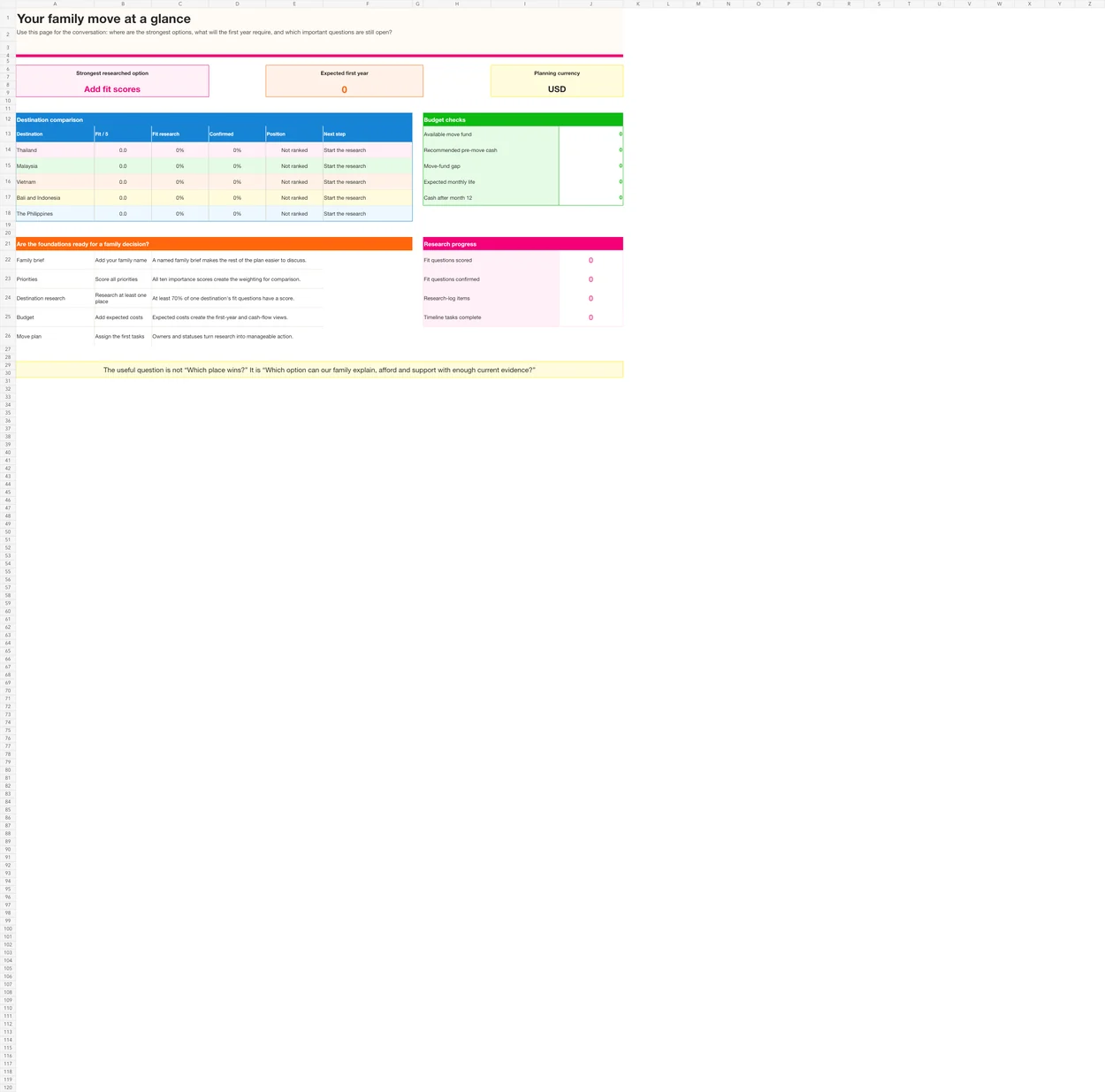
Ready to turn your research into a family move plan?
The Family Move Planner keeps your destination comparison, family priorities, budget, sources, questions and timeline in one organised system.
£39one-time digital purchase
Common questions
Questions about work permits and working in Indonesia
Does a residence visa let me work in Indonesia?
Not automatically. Immigration permission to stay and legal permission to perform a particular job or business activity are separate questions. Some routes combine them, some require an additional permit, and family or visitor status usually needs a separate work check.
Can my spouse work on a dependant pass?
Do not assume so. A dependant may need their own employer-sponsored status, work permit or formal variation before starting. Ask the employer to identify the exact authority, category and approval in writing—not simply say that the family visa is valid.
Does being paid overseas mean local work rules do not apply?
No. Authorities can look at where the person is physically working, who benefits from the work and what the immigration category permits. Overseas payroll also does not settle personal tax, employer payroll, social-security or corporate-presence questions.
Can I invoice clients or run my own company?
Only after checking both the person's activity and the business vehicle. Company registration, foreign-ownership approval and immigration permission solve different parts of the problem. Owning shares does not automatically authorise day-to-day work for the company.
Do professional qualifications transfer automatically?
Usually not for regulated work. Healthcare, education, engineering, architecture, law, accountancy and other professions may require recognition, registration, a temporary permit or local-language evidence before work authorisation can be completed.
Who should pay government work-permit costs?
Ask the employer to set out government fees, required employer contributions, professional fees and any lawful employee costs separately. Do not pay an intermediary against a vague promise of a job or permit, and obtain receipts from the official process.
What should happen if my employment ends?
The employer and worker may both have time-sensitive notification, cancellation, tax-clearance and immigration steps. Linked family status may also be affected. Ask for the exit sequence before signing the contract, not during the final week of employment.
How often should I recheck this information?
SettleHappy reviews these pages every 90 days and after major official announcements. You should still verify the live rules when an offer is made, before an application is filed and again before anyone starts work, because procedures can change between editorial reviews.
Is there a separate Bali work permit?
No. Bali uses Indonesia's national immigration, manpower, tax and business framework. Provincial or local licensing can still matter, but an agency's 'Bali permit' label should map to an exact Indonesian approval and category.
What is an RPTKA?
It is the employer's approved plan for using a foreign worker in a defined role and period. Current Ministry of Manpower rules connect it with worker documents, compensation-fund and reporting obligations; it is not a general permit the worker carries between employers.