
🇻🇳 Vietnam · employment and family status
Work permits and working in Vietnam
Vietnam's work-permit framework changed in August 2025. The current starting point is Decree 219/2025—not an old checklist copied from the previous decree. Families need an employer-led plan for the worker and a separate residence and work plan for every accompanying adult.
Last verified 10 September 2026
The short answer
What permission does a family need to arrange?
A foreign national working in Vietnam will generally need a work permit or a documented exemption under Decree 219/2025, coordinated by the employer with suitable immigration status. The rules recognise defined worker positions and forms of work; an e-visa, dependant residence or overseas salary does not create open permission to work.
Four separate checks
A residence document is only the first layer
Work through these in order for each adult. A positive answer at one level does not fill a gap at the next.
Employer-sponsored work
How the usual local-employment route works
The employer should own the process, explain it clearly and give the worker copies of every approval.
- 01
Employer
Classify the position and work form
The employer identifies the legal worker category, such as manager, executive, expert or technical worker, and the form in which the foreign national will work in Vietnam.
- 02
Employer
Check recruitment and exemption rules
Use Decree 219's current procedure to establish whether a permit is required, an exemption certificate is needed or a limited reporting exception applies.
- 03
Employer + worker
Prepare one coordinated file
Personal evidence, health and criminal-record documents, qualifications, experience and employer records must follow the current validity, certification, legalisation and translation rules.
- 04
Sponsor
Link work and residence
After approval, coordinate the correct visa or temporary residence documentation for the principal and eligible family members. Keep the work and residence expiry dates aligned.
Match permission to the real activity
Six working arrangements families often ask about
Job titles alone are not enough. The employer, clients, place of work and day-to-day duties all affect the answer.
Work permit or exemption
Vietnamese employment contract
The local employer normally leads the application and must match the worker to a recognised category, role, workplace and term.
Specific statutory form
Intra-company transfer
Decree 219 recognises intra-company movement as a form of work, but eligibility and evidence are specific and should not be assumed from group-company employment alone.
No simple general nomad answer
Remote work for an overseas employer
Vietnam does not provide a general visitor-to-remote-work shortcut. Work performed while physically in Vietnam also needs tax and employer-risk analysis.
Contracts do not replace permission
Freelance or consulting
Independent services, local clients and overseas contracts can each create different labour, business and tax consequences.
Check their own work status
Dependant spouse taking a role
Family residence does not automatically authorise employment. The spouse's employer must assess a separate permit or exemption before the start date.
Investment and work rules overlap
Investor or company manager
Investment-based immigration and company registration do not remove the need to classify hands-on work and any statutory work-permit exemption.
Spouses and dependants
Living together does not mean sharing work permission
A spouse or child may be eligible for linked family immigration status where the principal's category and validity support it, but this does not create work permission for the spouse. A prospective employer should assess the spouse independently under Decree 219.
Plan it early: Ask the principal employer how long family documents take and whether it supports them. If the spouse expects to work, keep a separate employer, permit/exemption, tax and residence timeline rather than adding a note to the principal's file.
Working for an overseas employer
Remote work still needs a legal route
Vietnam has no general digital-nomad visa that settles overseas remote employment for a relocating family. A 90-day e-visa is a temporary entry option, not a work permit or durable family residence plan. The fact that an employer and bank account are overseas does not answer Vietnamese tax or business-presence questions when duties are performed in Vietnam.
What to prepare
Before moving, obtain a written immigration and tax analysis based on the real duties, time in Vietnam, employer location, authority to sign contracts and clients served. Keep the overseas employer's consent and travel/workday evidence.
Self-employment and business activity
Owning a business and working in it are different questions
A foreign-invested company needs proper investment and enterprise registration, licensed business lines and tax setup. The founder's investor status, corporate office and day-to-day work remain separate legal questions; capital should be genuine and traceable.
- Investment Registration Certificate where the project requires one
- Enterprise Registration Certificate and correct business lines
- Sector conditions, licences and foreign-ownership restrictions
- The founder's visa/residence and work-permit exemption or permit evidence
- Accounting, invoices, payroll, tax and beneficial-ownership records
Regulated work
Check professional licensing before accepting the role
A work permit confirms the labour position; it does not replace a licence required by Vietnamese sector law. Healthcare, education, legal, engineering and other regulated work may require recognition or approval from a ministry, department or professional body.
Identify the regulator for the actual duties
Check recognition and legalisation of qualifications
Confirm experience and language requirements
Ask whether the employer or individual files the sector application
Keep the professional approval valid for the entire employment period
Employer, payroll and tax
What a prepared employer should be able to explain
The worker should not be left to join separate immigration, payroll and tax instructions after arrival.
Use Decree 219/2025
The current decree took effect on 7 August 2025 and replaced the foreign-worker provisions previously handled under Decree 152/2020 as amended.
File and report accurately
Match the worker's title, workplace, employer and form of work to the approved permit or exemption and report material changes through the competent route.
Operate compliant payroll
Assess withholding, social insurance, benefits and tax reporting for the worker; overseas-paid elements should not be left outside the review.
Protect the family timeline
Coordinate the principal's work permission with immigration sponsorship, temporary residence and linked family expiry dates.
Important: A work permit is not a tax ruling. Where duties are performed, days present, who pays and which entity receives the benefit can all matter.
If the job changes or ends
Plan the exit before the first day of work
A job-linked permission can affect the worker, the employer and family members whose residence depends on the principal.
- 1Employer + worker
Document the final date
Record notice, final pay, leave, severance position and the date on which the worker stops performing duties.
- 2Employer
Return or revoke work permission
The employer should follow Decree 219's current revocation and notification procedure rather than letting the document simply expire.
- 3Family
Recheck residence immediately
A job-linked visa or temporary residence card—and family status linked to it—may need cancellation, conversion or new sponsorship.
- 4Payroll + worker
Close the evidence file
Collect permit/exemption records, tax withholding evidence, social-insurance details, final payroll and employment confirmation.
Prepare before moving
Build one clear work-permission file
Check the live application list before legalising or translating documents. Authorities can set issue-date, format and authentication rules.
Identity and status
- Passport and current Vietnamese entry/residence records
- Marriage and birth evidence for family sponsorship
- Recent photographs in the specified format
- Accommodation registration and current address evidence
Work eligibility
- Contract, assignment letter or other document for the legal work form
- Role description matching manager, executive, expert or technical-worker evidence
- Degrees, training and detailed experience confirmations
- Professional licence or sector approval where required
Certification and timing
- Health and criminal-record evidence within the live validity rules
- Consular legalisation or applicable exemption
- Vietnamese translation and certification in the required form
- Copies of submissions, official receipts, permit and expiry calendar
High-change information
Recheck before anyone starts work
SettleHappy verified this guide on 10 September 2026. We schedule a full review every 90 days and bring it forward after a material official announcement. An application should still use the live authority pages on the day it is prepared.
Continue the research
Connect work permission to the rest of the move
Bring the research together
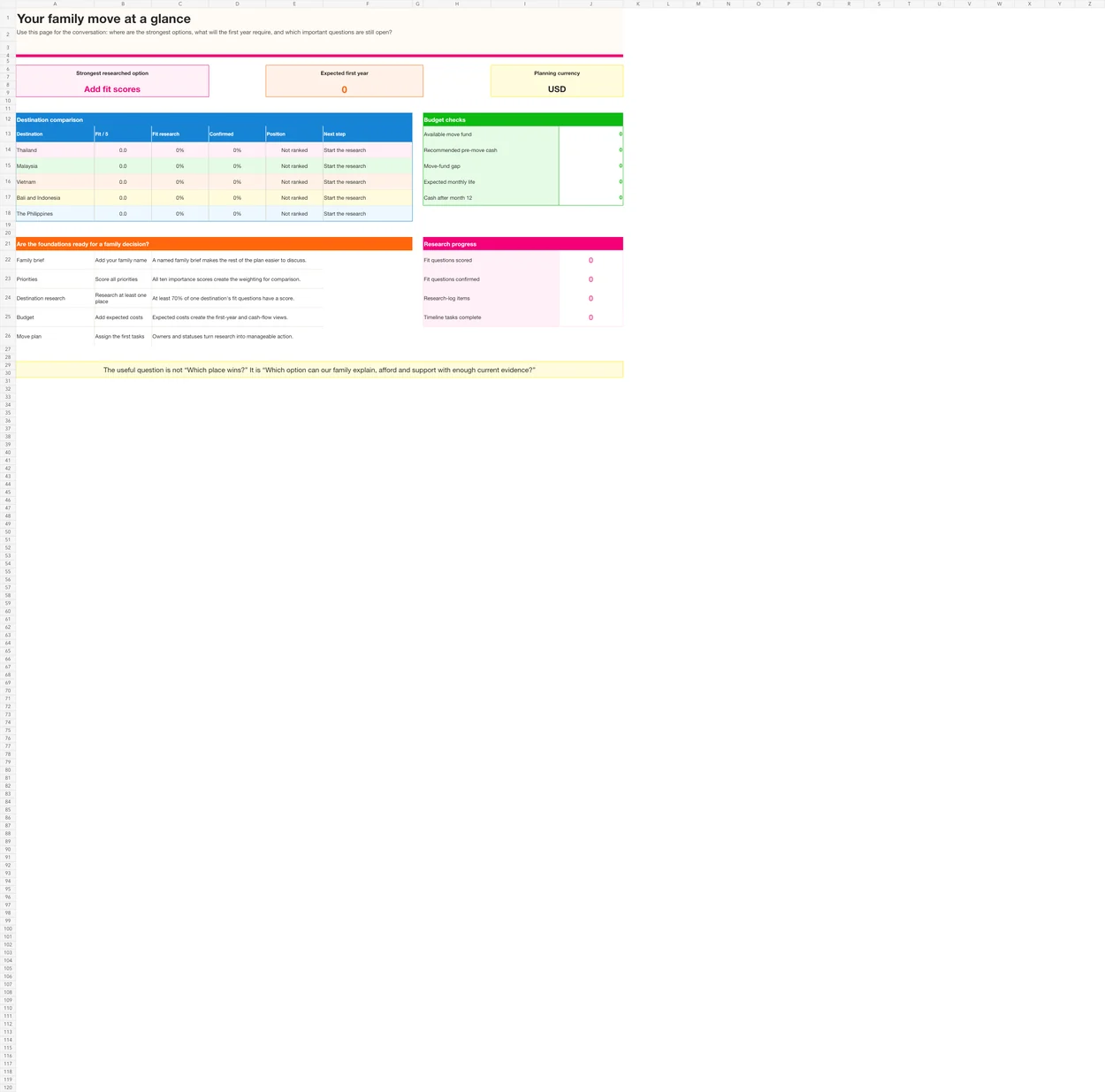
Ready to turn your research into a family move plan?
The Family Move Planner keeps your destination comparison, family priorities, budget, sources, questions and timeline in one organised system.
£39one-time digital purchase
Common questions
Questions about work permits and working in Vietnam
Does a residence visa let me work in Vietnam?
Not automatically. Immigration permission to stay and legal permission to perform a particular job or business activity are separate questions. Some routes combine them, some require an additional permit, and family or visitor status usually needs a separate work check.
Can my spouse work on a dependant pass?
Do not assume so. A dependant may need their own employer-sponsored status, work permit or formal variation before starting. Ask the employer to identify the exact authority, category and approval in writing—not simply say that the family visa is valid.
Does being paid overseas mean local work rules do not apply?
No. Authorities can look at where the person is physically working, who benefits from the work and what the immigration category permits. Overseas payroll also does not settle personal tax, employer payroll, social-security or corporate-presence questions.
Can I invoice clients or run my own company?
Only after checking both the person's activity and the business vehicle. Company registration, foreign-ownership approval and immigration permission solve different parts of the problem. Owning shares does not automatically authorise day-to-day work for the company.
Do professional qualifications transfer automatically?
Usually not for regulated work. Healthcare, education, engineering, architecture, law, accountancy and other professions may require recognition, registration, a temporary permit or local-language evidence before work authorisation can be completed.
Who should pay government work-permit costs?
Ask the employer to set out government fees, required employer contributions, professional fees and any lawful employee costs separately. Do not pay an intermediary against a vague promise of a job or permit, and obtain receipts from the official process.
What should happen if my employment ends?
The employer and worker may both have time-sensitive notification, cancellation, tax-clearance and immigration steps. Linked family status may also be affected. Ask for the exit sequence before signing the contract, not during the final week of employment.
How often should I recheck this information?
SettleHappy reviews these pages every 90 days and after major official announcements. You should still verify the live rules when an offer is made, before an application is filed and again before anyone starts work, because procedures can change between editorial reviews.
Which rules now govern foreign workers in Vietnam?
Decree 219/2025 took effect on 7 August 2025. The Government says it replaced the foreign-worker provisions in Decree 152/2020 as amended, so current applications should not rely on an old Decree 152 checklist.
Can I use Vietnam's e-visa for a remote-working family move?
The e-visa can support a temporary visit of up to 90 days for eligible travellers, but it does not itself provide a work permit or stable family residence. Resolve the specific work, tax and longer-term immigration position before relying on it.